Your next breakthrough is one wisdom transfer away. The conversation about NFT art speakers in the UK has changed shape — what boards, brand teams, and legal departments are asking in 2026 is sharper, more commercial, and grounded in legal reality rather than speculative appetite.
The UK Property (Digital Assets etc) Act 2024 made England and Wales the first jurisdiction globally to recognise NFTs as a third category of personal property — and that single legislative act reopened boardroom conversations that the 2021–2022 correction had closed. Creative directors, in-house counsel, and CMOs are not revisiting digital assets out of curiosity; they are making decisions about provenance, IP frameworks, and brand infrastructure.
The question is no longer whether digital assets matter — it is which voices carry the knowledge capital to translate that maturity into decisions a board can act on. Speaker Agency doesn't match speakers to topics; it architects the wisdom transfer that turns a complex, reputationally charged subject into a catalyst moment.
Why Hire an NFT & Art Speaker for Your Event
The NFT and digital art sector has cleared its speculative phase. What remains is a commercially serious, legally codified landscape — one that creative institutions, brand teams, and legal departments cannot afford to misread.
Provenance & IP in the digital age asks a question that now has legal weight behind it. The UK Property (Digital Assets etc) Act 2024 formally recognised digital assets, including NFTs, as a third category of personal property under English and Welsh law — the first jurisdiction globally to do so.
Legal teams handling acquisition disputes, brand managers structuring digital licensing agreements, and collectors making six-figure purchase decisions all need speakers who can translate that statutory framework into operational clarity — not a general briefing on blockchain, but a precise read on what English and Welsh property law now means for their specific context.
Generative AI × digital art ownership has created a second, parallel urgency. AI-generated content and NFT infrastructure now intersect in ways that leave authorship, copyright, and revenue attribution unresolved. Technology leaders and innovation officers at creative agencies, media firms, and entertainment labels face live, unanswered questions. A speaker who has built in this space — not written about it — carries a different quality of answer. In 2026, that distinction separates a useful session from a forgettable one.
Web3 brand activations beyond speculation remain on the agenda for major brands in luxury, gaming, sport, and entertainment — not because the hype returned, but because the infrastructure matured. NFT-backed loyalty programmes and membership mechanics are now evaluated on retention data and conversion rates, not market sentiment. CMOs and CDOs need speakers who can separate commercially validated mechanics from residual noise, and who have the case studies to back the distinction.
The speaker you choose signals what kind of conversation you want your audience to leave with — and on a topic this charged, that signal matters before the first slide appears.
What Sets a Great NFT & Art Speaker Apart
The most common briefing mistake on NFT and digital art topics is selecting a speaker based on fluency of commentary rather than weight of experience. Analysis travels; first-hand knowledge sticks.
Have they built or sold in the NFT space?
A speaker who has put digital art into market — or structured an NFT deal that closed — can answer the questions that no analyst can.
Pinar Seyhan Demirdag, co-founder of Seyhan Lee, widely cited as the world's first generative AI studio, brings exactly that depth: her speaking credits at SXSW and Google I/O reflect an audience appetite for someone who sits at the working intersection of generative AI and digital art ownership, not the theoretical one. For UK creative and technology audiences grappling with AI-generated authorship questions, that distinction is the whole session.
Do they understand the infrastructure as well as the art market?
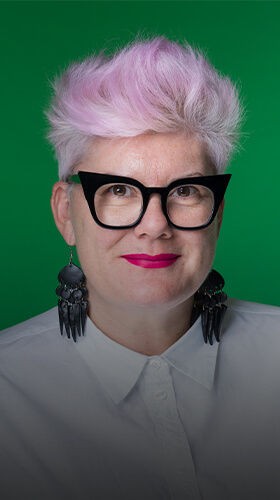
The most credible voices hold dual fluency — blockchain architecture on one side, creative and cultural context on the other. Kitty Horlick, founder of the web3 consultancy Blackwood, has built her practice explicitly around communicating both the possibilities and the limitations of web3 technologies — the precise register that risk-conscious corporate and legal audiences require. Speakers who can only serve one side of that conversation will lose half the room.
For event planners working alongside blockchain speakers on a broader digital infrastructure programme, this dual fluency becomes the selection threshold. The Art Basel & UBS Art Market Report 2025 notes that high-net-worth collectors under 40 now cite digital provenance and NFT-backed certificates as active purchase decision factors for physical works — a signal that the art market itself demands this infrastructure literacy.
Can they hold a room of sceptics?
Legal officers, CFOs, and risk teams carry earned scepticism from the 2021–2022 correction. A speaker who cannot address that history with data, legal grounding, and commercial case studies will not earn the room's trust — and without trust, no amount of insight lands. This criterion is more acute for NFT and digital art engagements than for almost any other technology topic.
Selecting the right speaker here is an act of wisdom architecture, not speaker selection — the right match between a specific room's history and a speaker's hard-won experience is what creates the catalyst moment an audience carries forward.
Topics Our NFT & Art Speakers Cover Most Often
NFT and digital art expertise spans substantially different professional entry points. The bullets below help you identify which sub-angle serves your specific audience.
AI-generated art and authorship rights — Who owns content produced by generative AI tools, and how do NFTs function as an ownership and provenance mechanism in that context?
NFT provenance for physical and digital works — How blockchain-backed certificates of authenticity are changing acquisition decisions for galleries, collectors, and luxury brands.
Web3 brand activations — Commercially validated NFT-based loyalty, membership, and fan engagement mechanics — what has worked for major brands and why.
Tokenised intellectual property frameworks — How media companies, entertainment labels, and fashion houses are structuring digital rights and licensing through tokenisation.
NFT market analysis and investment — Post-correction market dynamics, institutional adoption patterns, and the differentiation between speculative and utility-driven digital assets.
Digital fashion and virtual identity — NFT-backed wearables, avatar assets, and the emerging intersection of luxury fashion and digital self-expression.
Blockchain for creative industries — Technical literacy for non-technical creative and marketing professionals: how the underlying infrastructure works and why it matters for IP strategy.
These sub-angles rarely appear in isolation — the richest sessions draw on two or three of them, shaped around a single audience's most pressing decisions.
When Should You Book an NFT & Art Speaker
The use cases below span several distinct professional communities. The diagnostic question is not whether NFTs are relevant to your sector — it is which aspect of that relevance your audience needs to act on.
Creative industry conferences — Fashion weeks, art fair fringe events such as Frieze London, and design summits where digital art ownership and creator monetisation are live agenda items.
Brand and marketing leadership summits — CMO and CDO forums where brands in luxury, sport, gaming, and entertainment are evaluating NFT-based loyalty programmes alongside broader Metaverse and Web3 speakers content.
Legal and IP sector events — Following the UK Property (Digital Assets etc) Act 2024, law firms and in-house legal teams running training and briefing days on digital asset classification and IP protection.
Fintech and investment conferences — Crypto and digital asset investment firms, family offices, and wealth management firms hosting client education events on tokenised assets.
Innovation and R&D days — Internal corporate innovation days at media, entertainment, and technology companies exploring AI-generated content monetisation and digital rights frameworks.
Arts and culture institution events — Major galleries, museums, and public arts bodies hosting practitioner forums on digital provenance, collection digitisation, and new artist revenue models.
Gaming and esports industry events — Studios and publishers exploring in-game asset tokenisation, play-to-earn mechanics, and NFT-based digital collectibles for player engagement.
These contexts often overlap — a brand summit may carry legal and investment audiences in the same room, which is precisely where speaker selection becomes a strategic decision rather than a logistical one.
How to Choose the Right NFT & Art Speaker
The checklist below converts genuine interest in this topic into a defensible briefing decision.
Audience sophistication — Are attendees technically literate — engineering, legal, fintech — or creatively and commercially focused — marketing, brand, arts? The speaker who delivers a compelling session for a law firm's digital asset classification briefing will rarely land as well for a fashion brand's creative team exploring NFT-backed product drops. These are different rooms, even when the subject line is identical.
Practitioner versus commentator — Has the speaker built, sold, or advised directly in the NFT and digital art space, or do they primarily analyse from the outside? First-hand market experience is the baseline credibility test for any audience that carries scepticism from the 2021–2022 correction — and most UK corporate audiences do.
Format match — A 45-minute keynote that frames the strategic landscape differs fundamentally from a 2–3 hour workshop that walks a team through an NFT strategy or IP framework. Brief the speaker on which is required before content development begins; the two are not interchangeable.
Sceptic readiness — Post-correction audiences need a speaker who can address the boom-bust history directly — with data, legal context, and commercial case studies — rather than sidestepping it. A speaker who cannot answer "what went wrong in 2022?" in the first ten minutes of a C-suite session should not be on the shortlist.
Time horizon — Is the audience making decisions now — legal compliance, a current brand activation — or planning for medium-term digital rights strategy? Speakers differ in how near-term versus futures-oriented their content sits, and misaligning on this dimension produces a session that feels out of register.
Fee range and value alignment — NFT & art speakers on the UK roster start from £5,000, with specialist and internationally recognised voices commanding significantly more. For a full breakdown of how fees scale with seniority and format, see keynote speaker fees in the UK.
How Speaker Agency Helps You Find the Right Match
The six criteria above are useful in isolation. Applied together — with access to the right speaker pool — they produce a shortlist worth choosing from.
Map the wisdom gap. For NFT & art engagements, the gap is rarely the same twice — one organisation needs legal clarity on digital asset classification, another needs a creative team to grasp AI-generated art monetisation, a third needs its board to assess Web3 brand activation risk. We diagnose which gap before we match any speaker.
Curate the elite voices. From a 300+ UK roster and a 1,190+ global network, we identify speakers with first-hand NFT and digital art credentials — not commentators, but practitioners who have built, sold, or advised in the space. We deliver a curated shortlist within 24 hours.
Architect the catalyst moment. We work with you on format, room design, and content framing to ensure the session functions as a transformation blueprint — translating complex digital asset concepts into decisions your audience can act on the next morning.
Sustain the momentum. The catalyst moment is the beginning, not the end. We support post-event follow-on through recommended resources, speaker Q&A extensions, and advisory framing to help teams maintain progress on their digital asset strategy.
Speaker Agency operates as a Wisdom Catalyst across the UK, Europe, and Türkiye — which means whether your event is a London law firm briefing, a Paris luxury brand summit, or an Istanbul fintech conference, the right NFT and digital art voice is within reach. This is wisdom architecture in practice: not a database search, but a strategic match between a specific audience's decisions and a speaker whose experience makes those decisions easier to get right.






 After Dinner Speakers

 Discover Similar Topics