Transformation happens at the intersection of knowledge and action. When event organisers search for moderators speakers UK, the question beneath the search is always the same: who can hold a room of experts without losing the audience?
Across a single quarter in 2025, six of the UK's largest financial services firms booked externally moderated stakeholder forums — not because it was fashionable, but because the FCA expected perceived impartiality at the chair. Panel formats have proliferated across ESG summits, AI leadership forums and regulatory conferences, and the consequence is predictable: when the format is everywhere, the quality ceiling matters more than it ever did.
A weak moderator is now a measurable event risk, not an aesthetic shortcoming. Speaker Agency does not catalogue names — it architects the facilitation layer of your event's wisdom transfer, so the right moderator carries both the credibility to challenge and the composure to hold.
Why Hire a Professional Moderator for Your Event
The rise of the panel as the dominant conference format has transformed moderation from a logistical convenience into a strategic decision — one that deserves the same rigour as the speaker line-up itself.
Facilitation as delegate satisfaction driver — the moderator is not a compère. They are the mechanism through which expert knowledge reaches the audience in usable form. According to the Events Industry Council's APEX Event Design Handbook (2024), facilitation and moderation are among the top-three determinants of delegate satisfaction in multi-speaker formats — and structured facilitation consistently outperforms ad-hoc chairing on post-event NPS scores.
That gap does not close itself; it widens with each additional panellist on the stage. The moderator who extracts a sharp, quotable insight from a cautious expert is doing something skilled — and that skill is bookable.
Reputational and brand risk management — ESG commitments, DEI policies and geopolitical positioning all attract press scrutiny in 2026. A panel on these topics with a moderator who cannot redirect an evasive answer, or who loses control of a charged exchange, produces coverage the event team did not plan for. In regulated sectors — financial services, healthcare, professional services — this exposure lands at board level. The moderator is your first line of editorial control.
Hybrid and virtual moderation as a distinct discipline — managing turn-taking, energy and audience attention across in-room and remote participants simultaneously is structurally different from in-person chairing. It requires rehearsed technical fluency, deliberate pacing across two participant pools, and the authority to pull a remote speaker in without the room losing thread. This is not an add-on skill. It is a separate competency — learnable, demonstrable and bookable.
The moderator choice is as consequential as the panel line-up itself. Get both right, and the event produces something an audience remembers.
What Sets a Great Moderator Apart
Have they earned the right to challenge?
A moderator without domain knowledge manages the clock. One with it manages the truth. The critical distinction is not between journalists and executives — it is between those who understand the subject matter well enough to hold a panellist accountable for a weak answer, and those who simply pass the microphone.
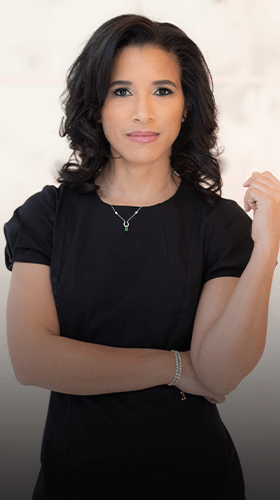
Cindy Yu, Contributing Editor at The Times and Sunday Times and former Assistant Editor at The Spectator, brings that forensic standard to geopolitical and international business panels — her journalism background means she reads evasion and redirects before the audience notices the gap.
Can they hold a room of sceptics?
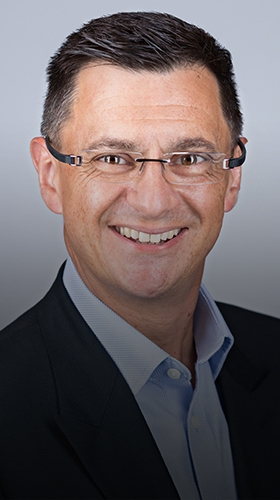
CFOs, policy specialists and engineering leads do not defer to a moderator simply because they are in the chair. Authority has to be earned in the room, in real time, through preparation and composure. Allister Frost — Microsoft's first Head of Digital Marketing Strategy — commands AI and digital transformation panels not because he has moderated many, but because he has lived inside the subject. Domain-literate moderators hold sceptical rooms because the room cannot dismiss what they know.
Have they done the preparation?
Harvard Business Review research confirms that moderators who prepare structured questions in advance and actively redistribute speaking time produce significantly higher audience engagement ratings than those who rely on organic discussion. The best moderators brief every panellist before the event, negotiate time parameters and arrive knowing which questions to press and which to hold. Spontaneity is an output of preparation, not its alternative.
The moderator is not a neutral chair — they are the structural spine of your event's wisdom architecture. Speaker Agency's role is to match that spine precisely to the intellectual demands of the room, treating the moderation brief as a facilitation-layer decision, not a speaker-slot decision.
When Should You Book a Professional Moderator
Seven corporate formats where the quality of the chair determines the quality of the outcome:
Annual conference keynote panels — Multiple senior speakers sharing one stage require structured time management and disciplined Q&A architecture; the moderator is what separates a panel from a conversation. Conference speakers and moderators are most effective when briefed together.
ESG and sustainability roundtables — High-stakes multi-stakeholder formats where the impartiality of the chair is a governance expectation, not a preference — particularly in regulated industries facing board-level ESG scrutiny.
AI and technology leadership forums — Fast-moving subject matter where a domain-literate moderator prevents panellists talking past each other or collapsing into jargon.
Financial services regulatory summits — Compliance-sensitive environments adjacent to FCA, PRA and Bank of England agendas where financial sector literacy in the chair is non-negotiable.
Diversity, equity and inclusion panels — Politically sensitive formats requiring a moderator with both composure and the authority to manage audience tension and panellist overreach.
Hybrid and virtual events — Multi-location conferences requiring a moderator fluent in managing in-room energy and remote participant engagement simultaneously.
Board and C-suite strategy retreats — Closed-door senior leadership formats where the moderator must command a room of peers, not an audience of delegates.
Industry award ceremonies and gala dinners — Crossover moderator/host functions where entertainment calibre and agenda discipline combine; after-dinner speakers with panel experience are particularly well-suited to this format.
The formats above appear separately in most event calendars — but the best-run organisations plan the moderation layer across all of them.
How to Choose the Right Moderator
The selection decision is a pre-briefing exercise, not a post-shortlist one — the criteria below should shape your brief before a name is considered.
Domain fit — Does the moderator understand the subject well enough to challenge an evasive answer, not just manage the clock? A moderator who cannot read a weak response cannot extract a stronger one. Match domain credibility to panel complexity, not to broadcast profile.
Format experience — In-person conference chairing and hybrid virtual moderation are distinct competencies. Confirm which format your event requires at briefing stage; carrying an in-person moderator into a hybrid environment without prior virtual experience is a structural risk.
Audience seniority — A moderator who commands a delegate audience of 500 may not carry the peer authority required for a 12-person C-suite strategy retreat. The room senses the difference within the first five minutes.
Preparation process — The best moderators brief each panellist individually 2–3 weeks before the event, develop structured question sets and agree time-management protocols in advance. Ask your shortlisted candidates to describe their preparation discipline before you select.
Crisis composure — Politically sensitive panels — ESG, DEI, geopolitical — require a moderator who can redirect, de-escalate and hold the room without becoming part of the story. This is not a personality trait; it is a demonstrable, verifiable track record.
Budget and tier fit — Professional moderators on the UK roster start from £5,000; senior media figures and former C-suite practitioners command more. For a full fee benchmarking reference, see how much does a moderator or keynote speaker cost in the UK before finalising your brief.
How Speaker Agency Helps You Find the Right Match
Identifying the right moderator requires more than a shortlist — it requires a structured brief that maps the intellectual and political demands of your panel before any name is proposed.
Map the wisdom gap. For a moderator brief, the wisdom gap is not just subject matter — it is the intersection of domain credibility, format risk and audience seniority. We begin by mapping the intellectual demands of your panel and the political sensitivity of your topic before a single name is suggested.
Curate the elite voices. Drawing on a 300+ UK roster and a 1,190+ global network, we produce a moderation shortlist within 24 hours — each candidate profiled against your specific format, sector and audience tier, not simply their broadcast credits.
Architect the catalyst moment. We work with your moderator in advance to build a transformation blueprint for the session — structured question sets, panellist briefing protocols and time-management frameworks designed to extract maximum insight from every voice on the stage.
Sustain the momentum. The event does not end when the panel wraps. We support post-event follow-on — whether that means connecting your moderator with your internal teams for a debrief, or identifying the next facilitated format in your annual event calendar.
Speaker Agency operates as a Wisdom Catalyst across the UK, Europe and Türkiye — which means the moderation brief is never treated as a speaker-slot transaction. It is a strategic wisdom transfer decision, and we approach it with the same advisory rigour we bring to a keynote brief or a boardroom advisory engagement. The 300+ moderators and speakers on our UK roster and the 1,190+ professionals across our global network exist to serve that ambition.






 After Dinner Speakers

 Discover Similar Topics