Transformation happens at the intersection of knowledge and action. The demand for BAME Speakers UK has moved well past the diversity-commitment era — Parker Review scrutiny, ESG reporting obligations, and board-level governance pressure have converted representation into a measurable strategic imperative.
The gap between stated ambition and delivered change is exactly where elite speakers from Black, Asian, and ethnically diverse backgrounds now operate. Organisations that book these voices to fulfil a visible commitment are buying the wrong thing.
Those that book them to transfer hard-won strategic wisdom — from founders who have scaled, executives who have led, clinicians who have researched — are making a knowledge investment. Speaker Agency designs that wisdom transfer: matching the right voice, with the right evidence base, to the precise moment an organisation is ready to move.
Why Hire a BAME Speaker for Your Event
The case for booking speakers from Black, Asian, and ethnically diverse backgrounds has acquired governance teeth — this is no longer a values discussion held at the margins of an event brief.
The Representation Gap is documented, not asserted.
The Parker Review 2023 progress report records that 96 of the FTSE 100 now have at least one director of colour on their board — a milestone — yet the FTSE 250 executive pipeline target for 2024 was on track to be missed by a significant margin. For event organisers reporting into HR directors, governance committees, or ESG leads, that gap is a brief in itself.
The Commercial Case reframes the booking for budget conversations. Diverse leadership consistently correlates with stronger decision-making quality, broader market insight, and measurable innovation output. Buyers who position the booking as a knowledge investment — not a representation gesture — open access to more senior audiences and more substantive briefs. The argument that a BAME keynote belongs at an inclusion conference misses the point; it belongs wherever an organisation needs thinking that the homogenous room cannot generate alone.
The Accountability Shift is where the urgency sits. Post-Sewell Report and post-BLM corporate commitment cycles, UK senior leaders face active scrutiny over whether stated DEI intentions have produced change that staff, investors, and regulators can verify. Speakers who can hold a boardroom accountable — with data, methodology, and first-hand experience of what structural change actually requires — are not motivational guests; they are the catalyst a culture-reset moment demands.
The choice of sub-angle determines the choice of speaker. A governance audience needs different evidence than a graduate cohort; getting that alignment right is the first design decision, not the last.
What Sets a Great BAME Speaker Apart
The practitioner-versus-commentator line is sharper here than in almost any other speaker category. Speakers from Black, Asian, and ethnically diverse backgrounds who appear on elite shortlists are not booked because of their background — they are booked because they carry world-class domain authority, and their lived perspective gives that authority a dimension no imported case study can replicate. Within the broader landscape of diversity speakers, this intersection of deep expertise and authentic experience defines the strongest bookings.
Do they carry domain authority beyond their identity?
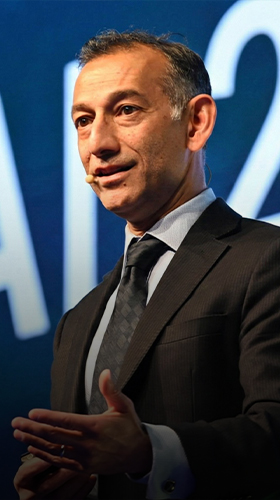
Dhiraj Mukherjee co-founded Shazam and grew it to 100 billion uses before Apple's acquisition; his keynotes on AI, leadership, and entrepreneurship carry that weight before identity enters the room. The lived perspective deepens the analysis — it does not substitute for it.
Do they bring first-hand operational evidence, not anecdote?
Dr Gifford Rhamie's Exit Velocity Paradigm is a systems-level methodology for inclusive leadership change, developed through executive consultancy at Rockstone rather than theoretical research. Audiences of CHROs and People Directors can work with it — which is a different standard from finding it resonant.
Can they hold a room of sceptical senior leaders?
Engineering teams, risk officers, and CFOs push back on assertions they cannot verify. Speakers who have led through real conditions — built, reported, restructured — can meet that pressure. Speakers who have primarily observed those conditions cannot.
The Parker Review 2023 data on the FTSE 250 pipeline shortfall gives context to why the room may be sceptical: progress has been slower than commitments suggested, and a keynote that restates the aspiration without transferring usable knowledge will not move the needle. The selection question is never which speaker looks right for the programme — it is which voice delivers the wisdom architecture that moves the room from acknowledgement to action.
When Should You Book a BAME Speaker
The use cases below span a full programme year — several will apply to the same organisation in the same calendar.
DEI Leadership Summits — Annual all-hands or senior-tier events presenting inclusion strategy; a speaker from Black, Asian, or ethnically diverse backgrounds with data-driven authority converts a policy update into a transformative knowledge moment.
Board Awayday / Executive Offsite — Boards under Parker Review scrutiny or ESG reporting pressure; a keynote from a practitioner in this space stress-tests leadership assumptions about diversity pipeline and culture with evidence, not encouragement.
Black History Month (October UK) — The highest-volume booking window; organisations need credible, non-tokenistic voices for internal events, panels, and external thought-leadership programming. See also Black motivational speakers for speakers whose primary register is inspirational.
International Women's Day and Intersectionality Events — Speakers at the intersection of gender and ethnicity serve double briefs; particularly strong for organisations embedding an intersectional lens into gender-focused programming.
Tech Industry Conferences and Innovation Days — The roster's depth in AI, entrepreneurship, and technology (Dhiraj Mukherjee, Ambarish Mitra, Azeem Azhar) makes these speakers natural headliners for diversity-in-innovation narratives, where identity and expertise reinforce each other.
HR and People Strategy Conferences — CHROs and People Directors booking content on psychological safety, inclusive leadership, and the commercial case for workforce diversity; Dr Gifford Rhamie is a strong fit for audiences that need methodology, not motivation.
Graduate and Early Careers Events — Organisations using BAME speakers to signal culture authentically to graduate cohorts; speakers with community-impact and social entrepreneurship backgrounds carry particular weight with this audience.
The patterns above regularly combine — a board awayday in September followed by a graduate event in October is a single strategic wisdom transfer, not two separate bookings.
Topics Our BAME Speakers Cover Most Often
Buyers arrive at this page with two distinct needs: some are sourcing DEI and inclusion content; others want a speaker from Black, Asian, or ethnically diverse backgrounds on a primary topic where identity context enriches rather than defines the keynote. The roster serves both.
Technology, AI & Innovation — Founders and technologists who have shipped real products and scaled real businesses; strong fit for fintech, pharma, professional services, and public sector innovation conferences where the audience needs operator-level insight, not market commentary.
Leadership & Inclusion — Practitioners in inclusive leadership, psychological safety, and diversity pipeline strategy; the primary audience is CHROs, People Directors, and board-level governance leads who need frameworks they can implement, not aspiration they already share.
Social Impact & Policy — Speakers on community development, criminal justice, youth empowerment, and racial equity policy; strong fit for public sector, charity, and CSR-focused events where lived proximity to the subject matter is part of the evidence base, not separate from it.
Health & Wellbeing — Speakers integrating lived experience of race and identity with clinical or research expertise in mental health, nutrition, and workplace wellbeing; relevant for NHS trusts, corporate wellness programmes, and employee experience events where the clinical and the personal cannot be usefully separated.
Entrepreneurship & Future of Work — Founders, investors, and future-of-work strategists whose entrepreneurial journeys carry a BAME lens; strong fit for business schools, scale-up summits, and investor-facing events where diverse capital routes and market perspectives are themselves part of the strategic argument.
How to Choose the Right BAME Speaker
A well-constructed brief narrows the field faster than any roster search. These criteria give you the decision rules before the shortlisting begins.
Sector fit — The speaker's domain expertise should match the industry context of the audience, not just the topic brief. A technology founder speaks differently to a fintech risk team than to a graduate intake; confirm the sector alignment is genuine before assessing anything else.
Practitioner versus commentator — Has the speaker operated at senior level inside an organisation, built something, or led a team through a structural change process — or do they primarily analyse others who have? The room will know the difference within ten minutes.
Format match — A 45-minute keynote demands a different speaker profile from a 3-hour workshop or a panel moderation role. Clarify the format before shortlisting; these skill sets are not automatically transferable.
Audience seniority — Board and C-suite audiences require a peer-level voice; graduate audiences need a different register entirely. Check which mode the speaker naturally operates in, not which mode their website claims.
Brief quality — A tokenistic brief ("we need a BAME speaker for Black History Month") attracts the wrong shortlist. A strong brief specifies the knowledge gap the event needs to close, not the identity category to represent. Speaker Agency reframes weak briefs as part of the advisory process; bring the draft, not the final version.
Fee expectations and lead time — Speakers from Black, Asian, and ethnically diverse backgrounds at corporate keynote level start from £5,000; premium and internationally recognised voices command significantly more. Review what a keynote speaker costs in the UK for full tier context before setting budget expectations with internal stakeholders.
Good speaker selection is a knowledge design decision — the question is not who fits the slot, but whose authority and perspective closes the gap your organisation is trying to cross.
How Speaker Agency Helps You Find the Right Match
The briefing conversation shapes everything that follows — start there, not with the roster.
Map the wisdom gap. Before shortlisting a single speaker, we work with you to define the precise knowledge deficit your organisation needs to close — whether that is the business case for diverse leadership, a culture reset after failed DEI commitments, or fresh strategic thinking on inclusion from someone who has built and led at scale.
Curate the elite voices. From our 300+ UK roster and 1,190+ global network, we identify speakers whose domain authority — in technology, leadership, social impact, health, or entrepreneurship — is matched by an authentic lived perspective that no briefing document can substitute. You receive a targeted shortlist within 24 hours.
Architect the catalyst moment. We design the transformation blueprint around the speaker: format, audience framing, pre-event briefing, and the narrative arc that converts a keynote into a moment your organisation will still reference twelve months later.
Sustain the momentum. The catalyst moment does not end when the speaker leaves the stage. We advise on follow-on resources, post-event engagement, and how to embed the insight into ongoing leadership programmes so the wisdom transfer compounds rather than fades.
Speaker Agency operates as a Wisdom Catalyst and Knowledge Architect — not a speaker directory, not a booking desk. UK-based, with reach across the UK, Europe, and Türkiye, we design the conditions in which elite wisdom produces measurable organisational change. The right speaker, briefed well and placed precisely, is the beginning of that process.







 After Dinner Speakers

 Discover Similar Topics