Transformation happens at the intersection of knowledge and action. Yet most motivational speakers UK planners book deliver exactly the opposite — a peak emotional experience that dissipates before the audience reaches the car park. The booking brief has shifted. In 2026, the live demand pillars are resilience under restructure, sustainable performance at sales kickoffs, and purpose-led culture days — three distinct audience needs that a standing ovation cannot satisfy.
Speaker Agency's role is not to source the speaker who generates the biggest reaction on the day; it is to architect the wisdom transfer that converts a catalyst moment into durable behavioural change — the kind that registers 90 days later, not 90 minutes.
Why Hire a Motivational Speaker for Your Event
Organisations keep investing in motivational events and keep seeing flat engagement — that gap demands scrutiny of what they are actually buying. The Gallup State of the Global Workplace 2025 puts the number plainly: 21% of employees globally are engaged at work, having fallen from 23% the year before — the first annual decline since the 2019–2020 pandemic period, despite rising L&D spend.
The lesson is not that motivational speakers fail. The lesson is that the wrong type of motivational speaker — hired for the wrong audience moment — produces a sugar-rush, not a shift.
Resilience and recovery demands something different from a temporary energy injection. Teams emerging from restructure, redundancy rounds, or sustained operational pressure carry scepticism into the room. The measure of success for this audience is behavioural durability 30 to 90 days post-event — whether people are still applying what they heard, still framing setbacks differently, still operating with the cognitive toolkit the keynote introduced. A speaker who can only fire people up will fail this test before the month is out.
Performance under uncertainty governs the sales kickoff and the revenue conference. These are high-stakes, high-visibility gatherings where the audience needs energy that lasts through Q1, not a mood that expires by Monday evening. Speakers who blend first-hand performance narrative with transferable practical mechanism outperform pure inspirational delivery — because mechanism is what survives the return to a difficult pipeline, a hostile prospect, or a missed number.
Purpose and meaning at work defines the culture day and the cross-functional offsite. Here the brief is explicit: connect individual narrative to organisational mission. Speakers who can make that connection — who have their own story of aligning personal values to collective purpose under real-world constraint — give the audience something to carry beyond the event rather than a slide they will never open again.
Knowing which sub-angle your audience needs is the decision that must precede the choice of speaker — because the right speaker for one of these moments is the wrong speaker for the other two.
What Sets a Great Motivational Speaker Apart
The practitioner-versus-commentator distinction matters here more than in almost any other category. A speaker who has lived through a real crisis — extreme workplace pressure, public failure, a professional identity stripped away — carries epistemic weight that a speaker who has only studied and taught motivation cannot replicate. Sceptical rooms read this difference immediately.
Have they operated under real pressure?
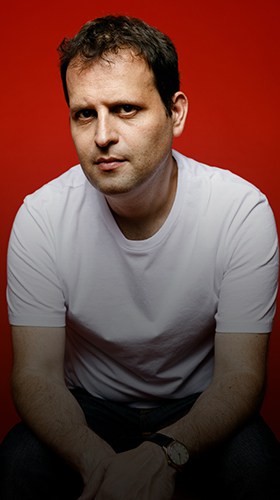
Dr Adam Kay — award-winning author of This is Going to Hurt, former junior doctor, and the name behind a #1 Sunday Times bestseller that spent over a year at the top of the charts — built his entire speaking proposition on documented, verifiable lived experience of a system that broke him and what he rebuilt afterwards. That is the operator's perspective, and it holds up under a room of CFOs or post-redundancy middle managers in a way that theoretical resilience frameworks do not.
Do they deliver mechanism, not just memoir?
The emotional peak is the easy part. An audience inspired in the room returns to the same inbox, the same team dynamics, the same structural pressures. A speaker who provides only an emotional peak has given the audience nothing to act on. The brief must specify that a transferable behaviour — a concrete reframe, a decision-making structure, a daily practice — leaves the room with the delegates, not the speaker.
Can they flex to the room?
A sales kickoff and a post-restructure all-hands require fundamentally different calibration — in register, in pacing, in the balance between challenge and support. The speaker who can read that difference and adjust in real time is worth considerably more than one who delivers a polished but fixed set.
Gallup's 2025 workplace research points to the same conclusion from a different angle: providing managers with basic training cuts active disengagement in half, and pairing training with ongoing development lifts thriving from 28% to 50%. The lesson is consistent — isolated catalyst moments under-deliver; catalyst moments paired with structured follow-up compound. That finding reframes the selection decision entirely.
The goal is not to find the most inspiring speaker — it is to find the speaker whose wisdom architecture makes behavioural follow-up natural, embedding the catalyst moment into the organisation rather than leaving it on the stage.
When Should You Book a Motivational Speaker
The timing of the investment matters as much as the investment itself — these are the moments where a motivational speaker shifts from nice-to-have to strategically necessary.
- Annual offsites and strategy retreats — The reset moment; a keynote that links personal agency to strategic priorities converts a planning session into a commitment event.
- Sales kickoffs and revenue conferences — The speaker must arm delegates with a mechanism they carry into Q1, not a mood that dissolves by the weekend.
- All-hands company meetings — Leadership visibility moments where motivational framing bridges executive narrative and ground-floor experience across every seniority level simultaneously.
- Industry summits and sector conferences — Speakers who anchor motivation in universal human experience travel across mixed-familiarity audiences without feeling generic.
- Manager development programmes — The cohort most likely to cascade the keynote; pairing a motivational speaker with a leadership speakers thread multiplies the reach of both investments.
- Customer-facing events and partner conferences — External audiences who did not choose to attend a corporate event; the speaker must deliver value that feels chosen, not obligatory.
- Awards ceremonies and recognition events — A motivational speaker reframes achievement as a repeatable process, ensuring celebration converts to forward momentum rather than resting on last year's results.
Each of these moments has a different audience state and a different desired outcome — the patterns combine to cover the full event calendar, which is why motivational speakers appear in more programme briefs than almost any other category.
How to Choose the Right Motivational Speaker
The selection decision is more consequential than the format suggests — these criteria give you a usable decision framework before you pick up the phone.
- Sector fit — A speaker whose reference points match the audience's industry reduces translation friction; the message lands faster and holds longer when delegates are not mentally converting analogies on the fly.
- Practitioner versus commentator — Verify that the speaker's core narrative is grounded in first-hand professional experience. Borrowed case studies and secondhand frameworks are visible to senior audiences; they erode credibility at the moment it matters most.
- Format match — A 45-minute keynote and a 3-hour interactive workshop require fundamentally different skills. Confirm which format serves the audience's state — their energy level, available time, and existing knowledge — before shortlisting.
- Audience seniority — Senior leaders need mechanism and peer-level challenge; junior teams need clarity and inspiration. The same speaker must flex register between these audiences, or separate bookings are required.
- Time horizon — Is the goal an immediate energy shift before a launch or a 90-day behavioural change after a restructure? The answer changes which speaker profile fits, and conflating the two produces a speaker who is exactly right for the event you did not have.
- Sceptic readiness — In boards, engineering teams, and post-redundancy workforces, motivational framing can trigger active resistance. Confirm the speaker has a track record of holding rooms that push back — not just rooms that arrive enthusiastic.
Work through these criteria in order before shortlisting, and use the complete UK keynote speaker hiring guide to stress-test your brief before the first conversation.
How Speaker Agency Helps You Find the Right Match
The distance between a motivational speaker who delivers polished content and one who produces a measurable shift in your organisation comes down to the quality of the advisory process behind the selection.
- Map the wisdom gap. For motivational speaker briefs, this means distinguishing between an audience that needs a resilience reset, one that needs performance re-energising, and one that needs purpose re-anchoring — three different gaps that require three different speaker profiles, and conflating them produces a speaker who is compelling to the wrong room.
- Curate the elite voices. Speaker Agency draws on a 300+ UK roster and a 1,190+ global network to identify speakers whose practitioner credibility and delivery style precisely match your audience's state. A shortlist with video evidence and context-specific rationale is with you within 24 hours of briefing.
- Architect the catalyst moment. The transformation blueprint extends beyond the speaker selection itself — format, positioning within the run-of-show, pre-event audience context, and post-event behavioural hooks are all designed to ensure the catalyst moment converts into lasting change rather than fading by the following week.
- Sustain the momentum. Post-event, Speaker Agency coordinates follow-on touchpoints — panel discussions, digital Q&A sessions, or written frameworks — that reinforce the keynote's core mechanism and give teams a structure for applying what they heard when they return to the pressures that were always there.
Speaker Agency operates as a Wisdom Catalyst across the UK, Europe, and Türkiye. Every motivational brief is treated as a strategic advisory engagement from first call to post-event review — not speaker procurement, but transformation architecture designed to ensure that knowledge capital generated at the event becomes a lasting organisational asset.
Featured motivational speakers at Speaker Agency
Eight motivational speakers from the Speaker Agency UK roster, with their current focus. Fees, availability and formats are confirmed on request; the typical planning window is six to eight weeks.
- Judith Malika Liberman: Storyteller, Art Therapist, Author, Speaker. Exclusively represented by Speaker Agency.
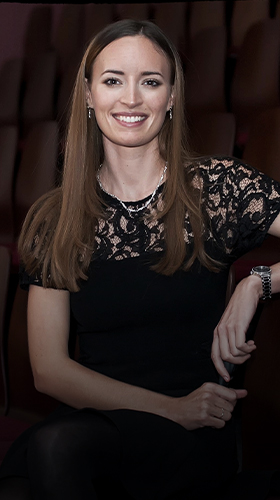
- Ella Podmore MBE: IET Young Woman Engineer of the Year 2020, McKinsey NGWL 2022, Surrey 40 Under 40 Winner. Exclusively represented by Speaker Agency. Supercar Scientist, Young Motivator With a background in material science and engineering Ella has gone on to become an advocate for women in the science and engineering space.
- Fernando Torres: Spanish footballer, World Cup Champion, and two-time European Champion with the Spanish National Team.
- Kimberley Wilson: Chartered psychologist and Nutritionist, Host of the 'Stronger Minds’ Podcast & Author of How to Build a Healthy Brain. Kimberley Wilson is a chartered psychologist with a master’s degree in nutrition.
- James Clear: #1 New York Times Bestselling Author of Atomic Habits, Top Booked Keynote Speaker and Founder of Habits Academy. James Clear is a writer and keynote speaker focused on habits, decision making, and continuous improvement.
- Lucy Faulks-Barnard: Mental Health and Resilience Expert. Lucy Faulks Barnard is a keynote speaker on the topics of resilience, mental health, emotional intelligence and positive psychology.
- Simon Squibb: Investor and Founder at HelpBnk, Influencer, Keynote Speaker. Simon has spent 10 years as an entrepreneur in the UK and 20 years as an entrepreneur in Hong Kong.
- Darren Edwards: Record-Breaking Disabled Adventurer, Award-Winning Keynote Speaker Best-Selling Author, Founder of Adaptive Expeditions. Darren Edwards is a pioneering adaptive adventurer, disability advocate, and resilience speaker who has fundamentally challenged perceptions of what people with physical disabilities can achieve.
The full list is on this page; for a shortlist matched to your brief, contact the UK team.






 After Dinner Speakers

 Discover Similar Topics