Transformation happens at the intersection of knowledge and action. Gender Equality Speakers UK are in demand precisely because most organisations already have the data — the pay gap figures, the McKinsey profitability evidence, the WEF parity timelines — and are still failing to convert that knowledge into structural change.
In 2026, intensified EHRC compliance scrutiny, mandatory gender pay gap reporting cycles, and AI hiring systems that replicate historical bias at speed have made gender equality a live risk-and-performance agenda item for boards, HR leadership, and technology firms alike.
The delegates arriving in your conference room are not there for another awareness session — they are asking for frameworks they can take back into a Monday morning conversation with their CFO. Speaker Agency's role is not to source an advocate and send an invoice; it is to architect the wisdom transfer that moves a room from good intentions to systems that do not revert.
Why Hire a Gender Equality Speaker for Your Event
Gender equality has moved from the values column to the business architecture column — and the speaker brief has moved with it.
The profitability mandate is the argument that unlocks budget at risk-committee level. McKinsey's Diversity Wins research shows that companies in the top quartile for gender diversity on executive teams are 25% more likely to achieve above-average profitability than their peers, whilst bottom-quartile firms for both gender and ethnic diversity are 27% less likely.
These are not correlation footnotes — they are the numbers a CFO or remuneration committee chair will recognise. Pair them with the reputational exposure of a published pay gap that sits outside sector benchmarks, and the case for a gender equality speaker shifts from "nice to have" to "the board asked for it."
The structural urgency signal sharpens the commercial framing with a timeline most boards have not internalised. The WEF's 134 years to close the global gender gap at the current rate of progress is not a statistic to deploy as shock value — it is the diagnostic that tells an organisation whether early action creates competitive advantage or whether waiting is a defensible position.
The UK's 14th-place global ranking means early movers capture both reputational and talent benefits; it also means the distance to parity is long enough that no single IWD keynote will close it. The right speaker contextualises this timeline as a strategic planning horizon, not a counsel of despair.
The audience expectation shift is the brief that most event planners underestimate. Post-2024, delegates arriving at a gender equality session have typically sat through several years of awareness-raising content. They arrive in 2026 asking different questions: what is the evidence base for this intervention, what does a remediated pay equity model actually look like in practice, and what is the first action I can take before the quarter ends?
A speaker whose content is still primarily advocacy-led will lose that room within twenty minutes. The speaker selection decision now determines whether your event produces a mandate for structural action or a well-intentioned round of applause.
For organisations whose brief extends beyond gender into the full inclusion agenda, our diversity speakers roster carries the same evidence-led selection standard across race, disability, and socioeconomic background.
What Sets a Great Gender Equality Speaker Apart
The gap between a good gender equality speaker and a transformative one is not charisma — it is the difference between someone who has studied structural inequality and someone who has built, changed, or led through it.
Do they carry evidence, not just conviction?
Caroline Criado Perez's Invisible Women is the clearest example of what evidence-led advocacy looks like at scale: a systematic audit of the data failures behind products, policies, and performance systems designed around a default male user. When she speaks to a corporate audience, she is not delivering a moral argument — she is handing the room a diagnostic framework for identifying the exact design flaws in their own organisation.
That is a fundamentally different brief from a speaker who makes the case for gender equality and leaves the room to work out what to do next.
Can they embed gender equality inside your sector's specific pressures?
Adelina Chalmers — known as "The Geek Whisperer" — operates at the intersection of STEM leadership transitions and gender representation, advising CTOs and science leaders on the structural points where the female technical pipeline breaks toward executive level. For a technology firm where the gender gap is a product-team and engineering-leadership problem rather than a general culture problem, the precision of that sector fluency is what makes a session land rather than slide. The right speaker already speaks your audience's language before the pre-event brief.
Can they hold a room of sceptics?
A risk committee, a CFO, or a senior engineering leadership team will interrogate the evidence base, challenge the commercial case, and resist framing that feels like advocacy rather than analysis. The speaker you need for that room has prepared for those exact questions — and has the data and first-hand credibility to answer them without becoming defensive. Where gender equity intersects with LGBTQ+ identity, our LGBT speakers bring the lived-experience depth that single-axis gender sessions cannot reach.
Selecting a gender equality speaker is an act of wisdom architecture — matching the precise combination of evidence, lived experience, and sector fluency to the exact gap your organisation needs to close. That matching is where a wisdom transfer succeeds or fails before the speaker ever walks into the room.
When Should You Book a Gender Equality Speaker
Seven contexts drive the majority of gender equality speaker bookings in the UK. Demand is not seasonal — it is structural — but the triggers below account for most calendar-year peaks.
International Women's Day events (March) — The highest-volume single trigger; demand on the UK roster peaks in January and February, and mid-tier speaker availability tightens sharply from mid-February onwards.
Annual D&I or culture conferences — Typically September–October, post-summer strategy reset; gender equality is frequently the lead track, and the brief at this point is forward-looking rather than retrospective.
Leadership development programmes — CHRO-commissioned cohort programmes for senior women or mixed-gender leadership populations; the speaker fills a single catalyst session within a multi-module programme and must integrate with the broader curriculum.
Gender pay gap reporting windows — UK mandatory reporting deadlines in April prompt internal events to contextualise published figures; the speaker brief here is explanatory and forward-looking, not defensive.
STEM sector and technology firm strategy days — Where gender representation in engineering, data science, and product roles is a live talent pipeline concern; sector-specialist speakers are strongly preferred over generalists.
Board and executive offsites — Chairs and NEDs increasingly commission a 45-minute evidence-led session on gender equity within ESG or governance half-days; the brief is analytical, not motivational.
Financial services and professional services conferences — HM Treasury Women in Finance Charter signatories and regulated firms with explicit gender targets need speakers who connect representation to risk management and regulatory compliance.
These triggers rarely arrive in isolation — a board offsite in March becomes an IWD event with a governance brief, and the speaker selection must serve both frames simultaneously.
Topics Our Gender Equality Speakers Cover Most Often
The gap between a well-framed booking and a missed brief frequently comes down to topic specificity. These are the coverage areas where our roster is deepest — each with a distinct audience context.
Gender data bias and the gender data gap — Drawing on the Invisible Women framework: how organisations design products, policies, and performance systems for a default male user, and the concrete steps for redesigning them. Strongest fit for product, technology, and policy audiences.
Pay equity and gender pay gap analysis — Moving beyond publishing the number to diagnosing the structural causes: occupational segregation, flexible working penalties, promotion rate differentials. The session outputs a remediation roadmap, not a narrative.
Women in STEM leadership — The pipeline from technical contributor to executive: where it breaks, why it breaks, and what sector-specific interventions have evidence behind them. Essential for technology firms and science-led organisations.
Intersectionality and inclusive leadership — How gender intersects with race, disability, socioeconomic background, and LGBTQ+ identity; why single-axis D&I programmes consistently underperform and what a more precise frame looks like in practice.
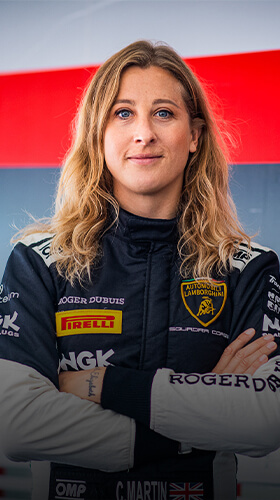
Trans inclusion in professional environments — Practical frameworks for HR, line managers, and leadership teams; speakers with direct lived experience — including Charlie Martin — bring a credibility that policy documents alone cannot match.
Global and cross-cultural gender equity — For multinational organisations where gender equality must account for differing legal, cultural, and social contexts across geographies; the speaker brief requires both comparative fluency and local sensitivity.
Allyship frameworks for senior leaders — Designed for mixed-gender leadership audiences ready to move from awareness to structural sponsorship behaviour; the session shifts from motivation to a 90-day action plan.
Each topic can be configured as a keynote, a workshop, or a panel anchor — the format determines which speakers are the strongest fit.
How to Choose the Right Gender Equality Speaker
The selection criteria below are the diagnostic questions that separate a transformative booking from a safe but forgettable one.
Audience diagnostic: what does this room already believe?
A room of committed allies needs different content from a room of sceptical senior leaders; the speaker's opening frame must be calibrated to where the audience actually sits, not where you wish they were. This requires a structured pre-event brief — not a ten-minute call.
Practitioner versus commentator — Does the speaker bring first-hand evidence from building something, changing a system, or leading through a specific gender equity challenge? Commentators can inform; practitioners can shift belief in rooms that have already heard the information.
Format match — A 45-minute board session on pay equity evidence is a different brief from a two-hour CHRO workshop on inclusive hiring systems. Not every speaker is equipped for both, and conflating them wastes the room's time and the speaker's credibility.
Sector fluency — Gender equality plays out differently in financial services, STEM, professional services, and the public sector. A speaker who understands your sector's specific talent pipeline constraints will land the message with precision; a generalist will require the audience to do the translation work themselves.
Intersectional scope — If your audience is global or your workforce is demographically diverse, a speaker whose frame accounts for race, disability, and LGBTQ+ identity will serve more of the room than one whose lens is narrowly gender-binary. Single-axis sessions produce single-axis outcomes.
Sceptic readiness — Can this speaker hold a room that includes people who will question the evidence base, the commercial case, or the relevance to their specific context? For board-level and risk-committee audiences, this is not optional — it is the primary selection criterion.
For budget parameters, the guide to what a keynote speaker costs in the UK sets out the fee landscape across format, profile, and sector.
How Speaker Agency Helps You Find the Right Match
Most briefs we receive name a topic. Our job is to diagnose the gap beneath it and match the speaker who closes it.
Map the wisdom gap. We establish where your organisation actually sits on the gender equity spectrum — whether that is a board that needs the commercial evidence made undeniable, an engineering leadership team grappling with pipeline representation, or an executive cohort ready to move from intent to structural redesign — so the speaker brief is built around a real diagnostic, not a default.
Curate the elite voices. From a 300+ UK roster and 1,190+ global network, we identify speakers whose combination of evidence, sector fluency, and lived-experience depth matches your specific gap — and deliver a shortlist within 24 hours, with a rationale for each name that goes beyond a biography summary.
Architect the catalyst moment. We work with you and the speaker to design the session format, content framing, and audience experience as a transformation blueprint — one that converts the room's existing knowledge into a mandate for structural action, not a round of applause.
Sustain the momentum. The session is the beginning, not the end: we advise on post-event resources, follow-on speaker engagements, and the internal communications that embed the catalyst moment into your organisation's gender equity programme.
Speaker Agency operates as a Wisdom Catalyst across the UK, Europe, and Türkiye — bringing the same strategic advisory standard to every engagement, whether that is a City of London financial services conference, a global technology firm's leadership day, or a public sector IWD event in Manchester. The brief is always the same: strategic wisdom matched to a specific gap, not a speaker placed in a slot.
Ready to Book a Gender Equality Speaker?
If you have a gender equality brief — a board offsite, an IWD keynote, a CHRO-led development programme, or a technology firm's strategy day — we will build you a shortlist matched to your specific audience, format, and outcome. Our selection process is built around your diagnostic, not our availability. Contact our team to share the brief, and we will deliver names, rationale, and fee guidance within 24 hours.
📞 +44 (0) 20 3393 1061
✉ info@speakeragency.co.uk
🌐 speakeragency.co.uk/contact







 After Dinner Speakers

 Discover Similar Topics