Your next breakthrough is one wisdom transfer away. The demand for Silicon Valley speakers UK has sharpened considerably since the UK government published its AI Opportunities Action Plan in January 2026 — boards that once treated Silicon Valley operating models as aspirational benchmarks are now treating them as competitive necessities.
UK executive teams in financial services, professional services, and scale-up tech are no longer satisfied with analyst commentary on what happens inside that ecosystem; they need practitioner accounts from people who have shipped AI products, founded category-defining companies, and made consequential calls under pressure. The question driving most briefs today is not "what is Silicon Valley doing?"
but "how do they actually build and move at that speed — and which parts translate here?" Speaker Agency does not match organisations to a famous name — it architects a wisdom transfer from operators who have lived inside that ecosystem, translating Silicon Valley's decision velocity into tools a UK leadership team can apply the following Monday.
Why Hire a Silicon Valley Speaker for Your Event
Booking a Silicon Valley speaker is a strategic planning decision — it belongs in the same conversation as your AI roadmap, not your events budget.
Silicon Valley as an operating system, not a geography describes the set of decision-making norms, speed-to-ship disciplines, and structured failure tolerances that produce outsized outcomes at companies like Apple, Google, and Stripe. UK executives who understand only the mythology — disruption, moonshots, the garage story — walk away inspired but unarmed.
The mechanics are what matter: how fast is a decision made, who owns it, what happens when it is wrong, and how quickly the organisation recovers. A Silicon Valley practitioner can answer those questions from memory, not from a report.
AI and product innovation from first principles is where the knowledge gap is most acute for UK boards right now.
The UK government's AI Opportunities Action Plan, published in January 2026 by the Department for Science, Innovation and Technology, frames closing the gap with US innovation ecosystem conditions as a national competitive priority — and the gap it is describing is not primarily one of funding or infrastructure, but of operating knowledge. UK leadership teams navigating AI adoption carry high stakes and limited internal reference points.
A speaker who has built and shipped foundational AI products fills that reference gap in a way no consultant's slide deck can — because they can describe not just what they built, but what broke, what they misunderstood, and what they would do differently.
Founder-to-enterprise translation addresses the specific demand arriving from CHROs and Chief Strategy Officers who want to import entrepreneurial decision velocity into established organisations without dismantling the governance structures that large companies require. This is a precise brief — it is not "inspire us with a startup story."
It is "show us which elements of Silicon Valley operating culture are portable into a FTSE-listed business with a legal function, a risk committee, and 8,000 employees." The speakers who can answer that question have done it — they have sat on both sides of that translation.
The ROI of this kind of wisdom transfer is not measured in applause. It is measured in the quality of decisions made in the weeks following the event.
What Sets a Great Silicon Valley Speaker Apart
The practitioner-versus-commentator line matters more on this topic than almost any other. A speaker who has analysed Silicon Valley from the outside can describe its culture accurately — but when a CFO asks "how did you decide to kill the product?", only someone who made that call can answer it.
Have they shipped something?
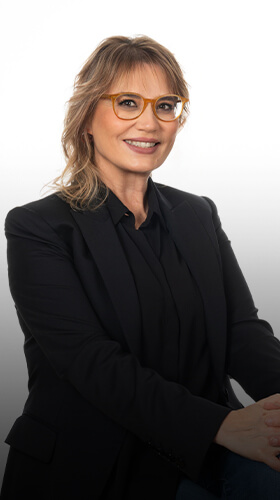
A speaker who put AI into production for a real organisation, launched a consumer product to millions of users, or led a company through an IPO can answer questions that a strategist or academic cannot. Adam Cheyer — co-founder of Siri and Viv Labs — is the clearest illustration of what this looks like: his work as one of the AI speakers whose practitioner credibility is grounded in building systems that now live on hundreds of millions of devices, not in theorising about what those systems could become.
Do they have a founder's scar tissue?
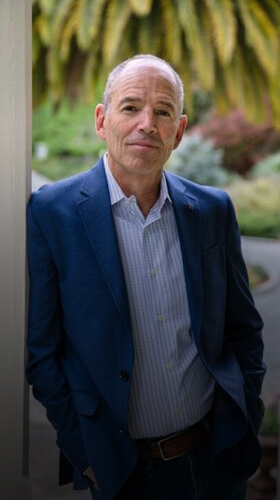
Generic startup narratives travel poorly in front of audiences with P&L responsibility. Leaders who have approved budgets, managed boards, and absorbed the consequences of the wrong call respond to speakers who have done the same — and can speak to the moment they realised the model was broken, and what happened next. Marc Randolph, Netflix's co-founding CEO and a career angel investor, carries this credential: his authority in a boardroom comes not from the Netflix success story but from the specific decisions made when the outcome was far from certain.
Can they translate Silicon Valley to a UK corporate room?
Technical fluency matters less than contextual translation. The speaker must connect West Coast operating models to the governance structures, talent markets, regulatory conditions, and capital dynamics of a UK organisation. The Future of Jobs Report 2025 identifies innovation culture and agile decision-making as critical organisational competencies through 2030 — that gap is structural, not a function of the economic cycle, which means the translation from Silicon Valley experience to UK application is not a nice-to-have framing device but the core of the strategic brief.
Choosing the right Silicon Valley speaker is an exercise in wisdom architecture, not speaker selection — the question is not who sounds most impressive on a bio but who can transfer operating knowledge to the specific leadership team sitting in the room.
When Should You Book a Silicon Valley Speaker
A Silicon Valley practitioner speaker creates the highest strategic value in the following contexts.
AI Strategy Days — Boards and executive committees commissioning full-day or half-day sessions to define AI roadmaps; Silicon Valley practitioners provide the benchmark that internal strategy teams cannot replicate from the inside.
Innovation Offsites — Senior leadership teams stress-testing product or commercial strategy against proven innovation models in an off-site format, where an outside voice with direct experience carries weight that an internal champion cannot.
Annual Sales Kickoffs — Commercial teams needing a high-credibility opening keynote that frames market opportunity through the direct experience of people who redefined categories — Netflix, Siri, and the companies built around them.
Technology Conferences and Industry Summits — UK sector events in FinTech, HealthTech, LegalTech, and RetailTech requiring an international headline keynote with first-hand Silicon Valley perspective.
C-Suite Strategy Retreats — CEO, CTO, and CPO-level gatherings where the brief is competitive intelligence and innovation culture, not motivational uplift.
Scale-Up and Growth Company Events — Series B–D founders and senior leadership cohorts who need to preserve startup decision velocity as they scale; see also start-up and entrepreneurship speakers for adjacent briefs that may not require specifically Silicon Valley provenance.
University and Business School Executive Education — MBA and executive education programmes where direct Silicon Valley experience carries more authority than case-study analysis.
Several of these contexts overlap — a C-suite strategy retreat and an AI strategy day are often the same brief expressed differently, and Speaker Agency's advisory process surfaces the right framing before the shortlist is built.
Topics Our Silicon Valley Speakers Cover Most Often
Silicon Valley experience spans a wide range of disciplines; the topics below represent the briefs UK clients commission most frequently.
AI and product innovation — Building and shipping AI products at scale; lessons from the foundation model era applied to enterprise adoption and the decisions that separate successful AI programmes from expensive pilots.
Startup culture in enterprise — How to import Silicon Valley's decision velocity, experimentation culture, and tolerance for productive failure into established organisations without creating regulatory or governance exposure.
Disruptive leadership — How the leaders who built category-defining companies make decisions differently — the mental models, the information shortcuts, and the risk appetites that UK executives can examine and selectively adopt.
Founder stories — First-hand narratives from people who started with nothing and scaled to global reach; the strategic value here is lived experience over retrospective analysis, and the specific decisions that could not have been taught in advance.
The future of technology — How the next wave of AI, platform shifts, and emerging technologies will reshape industries — from the perspective of people who shaped the previous wave, not those who observed it.
Angel investing and venture thinking — How professional investors in Silicon Valley evaluate ideas, assess founders, and think about long-horizon bets; directly relevant for corporate innovation teams, M&A functions, and boards considering strategic investments.
How to Choose the Right Silicon Valley Speaker
"Silicon Valley speaker" is a broad label — it spans AI founders, consumer tech CEOs, venture investors, and enterprise software executives — and the selection process needs to be more granular than it would be for a narrower topic.
Sector fit — Does the speaker's domain (AI, consumer tech, venture capital, enterprise software) map to the buyer's industry and the strategic challenge on the table? A speaker with deep FinTech operating experience will land differently in a retail board session, even if both audiences want the same Silicon Valley perspective.
Practitioner versus commentator — Has the speaker shipped a product, founded a company, or held P&L responsibility inside the ecosystem — or do they study and write about those who have? Both have a place; they are not the same thing, and the brief should distinguish between them.
Format match — A 45-minute keynote, a half-day workshop, and a boardroom session of twelve require fundamentally different preparation and interaction styles. Confirm format before shortlisting, not after, because a speaker who delivers a world-class keynote may not be suited to facilitating a working session with a product leadership team.
Audience seniority — A Silicon Valley founder's story lands differently with a board of twelve than with a conference hall of 500. The speaker must calibrate register and the depth of operational detail to match the audience's experience level, not just adjust the case studies.
Fee range and value alignment — Silicon Valley speakers start from £5,000 for emerging voices and reach £50,000 or beyond for globally recognised names; review keynote speaker fees in the UK for full tier guidance before setting a budget ceiling, so the shortlist is built to match the brief rather than to fill the budget.
Translation credibility — Can the speaker explicitly connect their Silicon Valley experience to the UK market context — regulatory environment, talent dynamics, capital constraints — rather than delivering a US-centric narrative that the audience has to translate for themselves?
How Speaker Agency Helps You Find the Right Match
Speaker Agency's advisory process is designed for leadership teams that need the right Silicon Valley practitioner — not simply the most recognisable name available.
Map the wisdom gap. We establish what the client's leadership team actually needs from a Silicon Valley speaker — whether that is a practitioner account of AI product development, a founder's perspective on scaling decision-making, or a first-hand competitive intelligence brief — before any shortlisting begins. The framing of the brief at this stage determines the quality of the shortlist.
Curate the elite voices. Drawing on a 300+ UK roster and 1,190+ global network, we identify the Silicon Valley practitioners whose specific operating experience maps precisely to the client's brief. A shortlist is delivered within 24 hours, with each recommendation accompanied by the reasoning that connects the speaker's background to the client's stated objectives.
Architect the catalyst moment. We work with the client and the confirmed speaker to design a transformation blueprint for the session — including pre-event briefing, audience framing, and the specific questions the speaker should be positioned to answer. The goal is a session that changes the quality of decisions made after the room clears, not one that simply holds attention while it is happening.
Sustain the momentum. The wisdom transfer does not end when the speaker leaves the stage. We advise on post-event follow-on activity — internal workshops, leadership team debrief frameworks, or a curated resource list — so the operating insights from Silicon Valley translate into decisions, not just notes.
Speaker Agency operates as a Wisdom Catalyst across the UK, Europe, and Türkiye. Wisdom architecture means the speaker, the format, the audience, and the strategic moment are aligned before anyone takes the stage — because the measure of a successful booking is not the applause in the room, but the clarity of thinking that follows it.






 After Dinner Speakers

 Discover Similar Topics