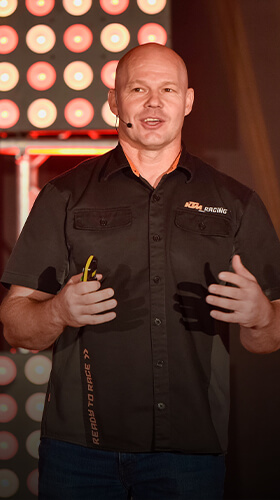
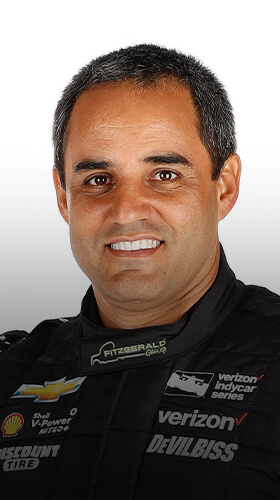
Transformation happens at the intersection of knowledge and action. Demand for Sports Speakers UK has accelerated sharply in the twelve months following Paris 2024 and Euro 2024 — six UK sectors, from financial services to healthcare, independently named elite sport their most-requested speaker category for leadership and wellbeing events. That demand is not nostalgia for sporting glory.
HR directors, heads of L&D, and C-suite event buyers are sourcing it because elite athletes carry performance frameworks — marginal-gains systems, pressure-tested decision loops, long-season accountability structures — that internal programmes cannot replicate. The audiences that leave with a transformation blueprint, rather than a highlight reel, are the ones whose event teams treated speaker selection as wisdom architecture.
Speaker Agency doesn't simply match clients to athletes; it architects the wisdom transfer from dressing room to boardroom.
Why Hire a Sports Speaker for Your Event
Corporate events don't have a content problem — they have a credibility problem. When the subject is performance under pressure, the most transferable expertise in the world sits not in a business school but on a starting line, in a locker room, or at a Grand Prix debrief.
High-Performance Culture Transfer asks what it actually takes to sustain output across a long season, a four-year Olympic cycle, or a World Cup campaign. Athletes who have managed performance anxiety, applied marginal-gains disciplines across every variable under their control, and stayed accountable through injury, loss, and public scrutiny carry frameworks that no internal L&D curriculum can fully replicate. The knowledge is lived, not designed — and that distinction is legible to an audience within the first five minutes.
Leadership Under Pressure is where sports speakers land hardest with C-suite and senior leadership audiences. Captains, head coaches, and team managers who have made real decisions — selection calls before a knockout match, tactical pivots mid-race — offer a pressure narrative that executive storytelling rarely matches. The crossover is not metaphorical: it is structural. The leadership skills demanded at an Olympic Games are the same ones your leadership speakers are asked to address. The difference is the proof point.
Resilience as a Strategic Imperative has moved from HR agenda item to board-level priority. According to CIPD's Health and Wellbeing at Work report, 76% of UK employees reported some form of work-related stress in the prior year — a figure that makes resilience programming a measurable business need, not a wellbeing nicety. Athletes who have recovered from career-defining setbacks, managed public failure, and returned to peak performance hold elite insights that connect directly to that gap.
The choice of sub-angle — culture, leadership, or resilience — shapes the entire event experience. Get that right before you get to the shortlist.
What Sets a Great Sports Speaker Apart
Not every athlete with a medal makes a great speaker. The gap between an impressive biography and a talk that changes how a leadership team operates is wide — and it is exactly where the sports-speaker category most often disappoints event planners who treat it as a celebrity booking rather than a motivational speakers selection exercise requiring deeper scrutiny.
Have they led under genuine pressure?
A speaker who has captained a team through a tournament knockout, managed a locker room in crisis, or competed at an Olympic final carries an authority that cannot be scripted. The pressure must be real, the stakes must have been high, and the outcome must have mattered to people beyond themselves.
Do they transfer the lesson, not just the story?
The sporting story is the entry point — it earns attention. The transferable framework is the deliverable. A speaker who can articulate why their preparation system worked, not only that it worked, gives a corporate audience something they can act on by Thursday.
Can they read a corporate room?
Engineering leads, risk officers, and finance directors push back differently from general audiences. The best sports speakers have developed — through repeated delivery across boardrooms and conference stages — the ability to translate sporting lessons into operational language without losing the visceral credibility of the original context.
Lord Sebastian Coe demonstrates why these criteria matter simultaneously. As World Athletics President and Chair of London 2012, he brings a talk — "Change, risk & handling uncertainty" — that is grounded in both competitive athletic achievement and the organisational complexity of staging the most scrutinised event in global sport.
Luke Donald MBE, European Ryder Cup-winning captain (2023) and former World No. 1, offers a different but equally instructive arc: the transition from individual champion to collective leader responsible for twelve players, twelve temperaments, and one shared outcome. Deloitte's 2024 sports industry trends analysis identifies this crossover — between elite sports performance methodologies and corporate leadership development — as one of the most significant growth areas in the sector.
The decision is not which sport to represent on your stage. It is which wisdom architecture best serves the transformation your audience needs to make.
When Should You Book a Sports Speaker
The event context determines which speaker type — and which talk theme — will land. Here are the use cases where sports speakers consistently deliver their strongest return:
Annual Sales Kickoffs — High-performance and resilience narratives are among the most-requested for Q1 conferences where motivation, target-setting, and team cohesion are the primary objectives.
Leadership Development Retreats — Off-site programmes for senior cohorts seeking peer-level challenge on decision-making under pressure, psychological safety, and high-performance team dynamics.
Employee Wellbeing Days — Resilience, mental fitness, and sustained-pressure management resonate across financial services, professional services, and healthcare — the sectors where the CIPD wellbeing data is most acute.
Diversity, Equity & Inclusion Conferences — Sports speakers with lived experience of breaking structural barriers bring authenticity that panel discussions frequently cannot; this is a distinct commissioning need, not a bolt-on.
Team Building and Away Days — Experiential-format events where speaker content is paired with team activity; sports professionals with explicit teamwork frameworks are particularly effective here.
Corporate Dinners and Award Ceremonies — After-dinner sports speakers anchor entertainment-led formats where name recognition and storytelling ability are the primary criteria.
Industry Summits and Association Conferences — Sports governing bodies, sports-business events, and cross-sector summits booking athletes for performance-thinking cross-pollination.
These use cases are not mutually exclusive — an annual conference may carry a wellbeing keynote in the morning and a leadership session after lunch. The pattern of needs, read together, defines the brief.
How to Choose the Right Sports Speaker
A shortlist built around a famous name rarely survives contact with the event brief. The selection question is not who the speaker is — it is whether their specific experience maps to what your audience needs to think or do differently.
Topic alignment before sport type — The relevant question is whether the speaker's core theme (resilience, leadership, marginal gains, DEI, teamwork) matches the event's strategic objective. The sport is context; the theme is the deliverable.
Practitioner vs. commentator — A speaker who has captained a team, managed a locker room, or competed at an Olympic final carries a materially different authority from a pundit or broadcaster. Clarify which form of credibility the audience will respond to.
Format match — A 45-minute inspirational keynote, a 2-hour facilitated workshop, and an after-dinner speech require distinct speaker profiles. These formats are not interchangeable, and a speaker excellent in one may underperform in another.
Audience seniority — Board-level audiences require peer-level organisational leadership experience alongside athletic achievement; mixed-seniority cohorts may respond more readily to an athlete whose resilience arc connects across levels.
Budget and fee tier — Sports speakers in the UK start from £5,000, with top-tier athletes and household names ranging considerably higher. Understanding the fee landscape early prevents shortlist misalignment — see how much a keynote speaker costs in the UK for a full breakdown by category and format.
Sceptic readiness — Engineering leads, risk officers, and CFOs push back on content that feels inspirational but operationally thin. Confirm the speaker can field hard questions and translate sporting lessons into the language of the room.
A speaker who is right on five of these six criteria and wrong on one — usually format or audience seniority — will still disappoint. The brief should be honest about all six before the shortlist is built.
How Speaker Agency Helps You Find the Right Match
Most speaker searches start with a name. Ours start with a gap — because the name that fills a gap delivers a catalyst moment; the name that doesn't leaves a room politely applauding and nothing changed by Monday.
Map the wisdom gap. We identify whether your organisation needs resilience frameworks, leadership-under-pressure narratives, high-performance culture systems, or DEI authenticity — because the gap determines the speaker type, not the sport.
Curate the elite voices. From a 300+ UK roster and a 1,190+ global network spanning Olympic champions, World Cup winners, Grand Prix drivers, and world-record holders, we build a focused shortlist within 24 hours — matched to theme, format, and audience seniority.
Architect the catalyst moment. We work with the selected speaker to design a transformation blueprint that connects their elite performance experience directly to your organisation's current strategic or cultural challenge — so the session is engineered to shift thinking, not simply to fill a slot on the running order.
Sustain the momentum. Post-event, we support the follow-on: additional workshop formats, Q&A extensions, or a speaker series that reinforces the high-performance behaviours introduced on the day.
Speaker Agency operates as a Wisdom Catalyst — not an intermediary that processes bookings, but a strategic partner that turns an athlete's experience into measurable organisational change. Our reach spans the UK, Europe, and Türkiye, with a global network that places the right elite insight in front of the right audience, wherever the event sits. The organisations that come back to us are not the ones who booked a famous face; they are the ones who left their event with a changed room.
Topics Our Sports Speakers Cover Most Often
The sports-speakers category is broader than any single sport — and event organisers who search by sport type rather than by theme consistently build weaker shortlists. The most productive starting point is the organisational need. Here are the themes our clients most frequently commission:
High-Performance Culture & Marginal Gains — Systematic improvement frameworks drawn from elite training environments; directly applicable to sales, operations, and product teams.
Leadership Under Pressure & Decision-Making — Captaincy, coaching, and real-time tactical decision-making under the conditions that corporate case studies can only approximate.
Resilience, Mental Toughness & Adversity Navigation — Managing sustained high-pressure periods, recovering from public setback, and building psychological durability across a team.
Teamwork, Collective Achievement & Accountability — What it takes to align individual performance with collective outcomes — without removing accountability from either.
Diversity, Inclusion & Breaking Barriers in Sport — Athletes who have challenged structural exclusion bring a credibility to DEI conversations that reframes the subject entirely.
Overcoming Career-Defining Setbacks — Injury, elimination, public failure, and the disciplines required to return — a narrative arc with direct relevance to organisational change.
Continuous Improvement & Peak Performance Systems — The process architecture behind sustained excellence: tracking, reflection, iteration, and the discipline to do it without an external deadline.
Speaker Agency matches each theme to the speaker profiles across the full roster where the experience is genuine, not approximate — because the difference is audible in the room.







 After Dinner Speakers

 Discover Similar Topics