Your next breakthrough is one wisdom transfer away. The search for new speakers in the UK has shifted from a fallback position — what you book when established names are unavailable — to a deliberate programming strategy with measurable audience impact.
According to Cvent's industry research on event planning, corporate event planners are increasingly prioritising fresh speaker voices over established circuit names, with content quality and audience differentiation now driving sourcing decisions. The 2026 cohort arriving on the corporate stage includes co-founders, former commissioners, and practitioner scientists who built authority through operational roles — not through keynote training circuits. Their expertise is harder-won and, for most audiences, entirely unheard.
Speaker Agency doesn't surface unfamiliar names and leave you to judge the fit — we architect the wisdom transfer that turns a fresh voice into the most strategically charged moment in your programme.
Why Hire a New Speaker for Your Event
Booking a new speaker is not a consolation prize — it is a precision programming decision, and the most forward-thinking event directors are making it on purpose.
Audience freshness as a programming strategy is no longer a soft preference. Delegate engagement scores decline when the same circuit names recur across annual programmes — the faces and frameworks become familiar to the point of invisibility. The industry research consistently confirms it: a growing share of UK corporate event planners are actively seeking speakers not previously seen on mainstream circuits.
Novelty of voice has become a top-three booking criterion — not because audiences are easily distracted, but because they are experienced enough to know when they have heard a message before.
Credential depth over name recognition is the second case, and it is arguably stronger. The most compelling voices emerging onto the UK corporate stage in 2026 are not graduates of speaker academies. They are co-founders whose companies scaled to global relevance, public servants who held command through genuine crises, and scientists whose research has changed policy.
Their authority was forged in operational contexts, not on conference platforms — and that is precisely what sophisticated audiences can detect and respect. Curation that surfaces these practitioners is doing something a search engine cannot.
Diversity of perspective as strategic value closes the argument for organisations with DEI event briefs. New speakers from underrepresented or non-traditional career paths do not require a trade-off between content quality and representation objectives. Increasingly, they satisfy both simultaneously — a point that removes one of the most persistent tensions in event planning. The right unfamiliar voice, matched with precision to your audience, produces higher delegate engagement than a familiar name delivering a repeat message. That is not a soft claim — it is a programming result.
What Sets a Great New Speaker Apart
The distinction that matters is not between famous and unknown — it is between practitioners and commentators. A new speaker with genuine operational depth will outperform a well-known keynote veteran who has been distilling the same framework for a decade.
Do they bring operational experience, not just opinions?
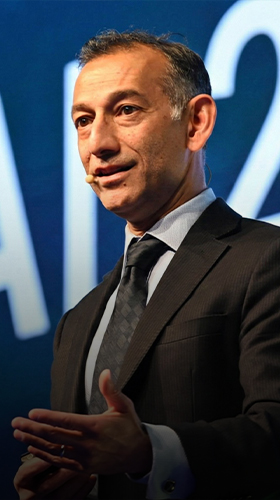
The first test is whether the speaker has done the thing they are describing, at a scale and in conditions that make the story specific. Dhiraj Mukherjee co-founded Shazam — a product that reached 100 billion uses before its acquisition by Apple — and was named in the FT's Top 50 European tech entrepreneurs. When he speaks on AI and leadership adaptation, he is drawing on the experience of building at commercial scale under competitive pressure, not synthesising other people's accounts of it.
Have they built something or led through something real?
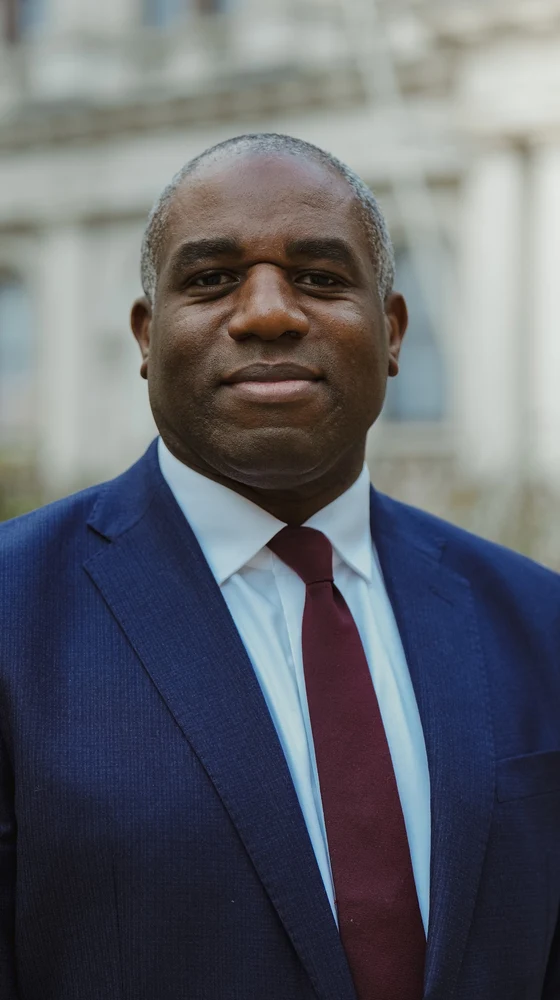
Andy Roe served as London Fire Commissioner, taking command of the service in the period following the Grenfell Tower fire — one of the highest-stakes leadership contexts any public servant has faced in recent UK history. His perspective on change management, high-performance teams, and risk is not theoretical. Together, Mukherjee and Roe illustrate what the new-speaker category actually contains across sectors: depth, credibility, and the kind of first-hand story that travels across different audience types without losing its charge.
Can they hold a room that hasn't heard of them?
This is the hardest quality to assess from a profile alone, and it is the one that matters most on the day. According to the LinkedIn Workplace Learning Report 2025, employees rate practitioner speakers with recent hands-on experience significantly higher than generalist keynote speakers on post-event learning surveys.
The ability to establish credibility rapidly — to earn the room's trust before the first case study lands — is a learnable, assessable capability. Speaker Agency's curation process is built around wisdom architecture, not speaker selection: we identify practitioners who can transfer their operational knowledge into a room, not merely describe it from a distance.
When Should You Book a New Speaker
The use cases below are not exhaustive, but they are the moments where a new voice delivers a return that a familiar name cannot replicate.
Annual conference refresh — Programme directors breaking a multi-year pattern of the same roster; a new voice signals strategic evolution to delegates. Conference speakers benefit most when the programme itself has something new to say.
Internal leadership summits — HR and L&D leads commissioning keynotes where a fresh external voice carries more credibility with employees than internal messaging alone.
Industry association events — Trade bodies seeking to position themselves ahead of the curve on emerging expertise: AI, behavioural economics, longevity science, creator economy.
DEI-focused event days — Events with explicit diversity-of-voice briefs; new speakers from underrepresented backgrounds or non-traditional career paths satisfy both content and representation objectives.
Start-up and innovation days — Scale-up ecosystems and corporate innovation forums where practitioner founders carry more weight than established management thinkers.
Sales kickoffs and commercial team events — Where novelty has motivational value; a speaker the audience has not heard produces immediate attentional uplift. The best motivational speakers in this category arrive with a story the room has not yet consumed.
Academic, research, and policy forums — Where scientist-practitioners or former government advisers bring a tier of credibility specifically sought by senior academic or policy audiences.
These use cases often combine: a DEI brief and an annual conference refresh are not mutually exclusive, and the speaker who satisfies both is exactly who precision curation should find.
How to Choose the Right New Speaker
The criteria below form a working brief — not a checklist to complete in isolation, but a set of inputs that, once clarified, allow Speaker Agency to return a precise shortlist within 24 hours.
Sector fit — Does their operational background map to your audience's industry and vocabulary? A founder who built in fintech speaks differently to a financial services audience than a generalist tech speaker. Proximity to the audience's world is worth more than a polished delivery from outside it.
Practitioner versus commentator — Have they run something, led something, or built something at consequential scale? First-hand operational experience is the primary differentiator for new voices — the absence of name recognition must be offset by the presence of something the audience cannot easily find elsewhere.
Format match — A 45–60-minute keynote and a 2–4-hour workshop are structurally different deliveries with different skill sets. Confirm the format before shortlisting; a speaker who excels at one is not automatically suited to the other.
Audience seniority — A C-suite audience requires a peer-level speaker with board-room authority and the composure to hold that register without prompting. A graduate or early-career cohort has different calibration needs entirely.
Fee range and value framing — Newer names do not automatically command lower fees. Most corporate bookings sit between £5,000 and £25,000 depending on profile, sector, and format; soft-topic bookings may start lower. For a full breakdown of what drives fee variation, see how much a keynote speaker costs in the UK.
Sceptic readiness — Can this speaker establish credibility rapidly in a room that has never heard of them? Assess how quickly their credentials land in the opening minutes, before shortlisting.
How Speaker Agency Helps You Find the Right Match
Finding the right new speaker is a knowledge problem before it is a search problem. Our advisory process is built to solve it in sequence.
Map the wisdom gap. We begin by diagnosing what your audience needs to hear that they have not heard before — identifying the knowledge or perspective gap that a well-matched new voice can close with precision, based on your brief, your sector, and your audience's current exposure.
Curate the elite voices. Drawing on our 300+ UK roster and 1,190+ global network, we identify new speakers whose operational credentials match your brief — assessing sector alignment, format fit, and audience seniority before a single name reaches your shortlist. The shortlist is returned within 24 hours.
Architect the catalyst moment. We work with you and the speaker to shape the transformation blueprint: the format, narrative arc, and audience engagement design that turns a debut keynote into the most talked-about session of your event. The knowledge capital a new voice carries should land with the impact it deserves.
Sustain the momentum. Post-event, we facilitate follow-on materials, speaker Q&A resources, and access pathways so that the energy a new voice generates in the room continues to shape your organisation's thinking beyond the day itself.
Speaker Agency operates as a Wisdom Catalyst — not a listings directory, not a procurement layer, but an advisory partner that treats your knowledge brief as seriously as you do. Whether your next event is in London, Manchester, Edinburgh, continental Europe, or Türkiye, our curation process ensures that a new name on your programme is also the right name — selected because the fit is exact, not because the availability was convenient.







 After Dinner Speakers

 Discover Similar Topics