Transformation happens at the intersection of knowledge and action. The demand for workplace culture speakers UK has sharpened considerably — organisations are no longer asking what good culture looks like; they're asking how leaders deliver it under specific, often uncomfortable, constraint. In 2026, UK corporate audiences arrive at culture events post-framework. They've seen the values posters, completed the e-learning modules, and sat through the awareness sessions.
Three pressures now define the brief: hybrid working that tests shared identity daily across distributed teams; mature inclusion programmes that have exhausted awareness and need behavioural intervention; and culture fragility inside post-merger, post-restructure, and scaleup environments where the cost of getting it wrong is measured in talent loss, not feedback scores. A generalist motivational talk does not serve any of these briefs.
Speaker Agency doesn't fill a culture slot on an agenda — we architect the wisdom transfer that turns stated values into the decisions leaders make under pressure on an ordinary Tuesday.
Why Hire a Workplace Culture Speaker for Your Event
The credibility gap at the centre of UK culture investment in 2026 is not a spending problem — it's a behaviour problem. The CIPD Good Work Index 2025, based on responses from 5,017 UK employees, shows that only 37% say their managers allow them or their representatives to influence final decisions, and fewer than half report seeing their managers take meaningful action to encourage employee voice.
Organisations are investing in culture and not moving the needle where it matters — in the room, in the meeting, in the moment of decision.
Culture under hybrid pressure demands principles that survive a Slack thread, not just an offsite. When shared identity must be maintained across distributed teams — some remote, some on-site, many both in the same week — organisations need speakers who have designed cohesion under those exact conditions. Not cohesion in theory. Cohesion in practice, tested against the friction of asynchronous communication and fragmented physical presence.
Inclusion and belonging beyond the awareness phase describes the majority of mature UK DEI programmes right now. The awareness cycles are complete. Employees have attended the sessions; senior leaders have signed the commitments. What those programmes now need is a speaker who has led behavioural intervention — someone who has closed the gap between stated intent and enacted behaviour inside a real organisation under real time pressure. Presenters of diversity statistics no longer serve this brief.
Culture during organisational change is where the stakes are highest. Post-merger environments, post-restructure all-hands, scaleup inflection points — these are the moments when shared identity is most fragile and the most expensive to rebuild. A speaker who has navigated cultural integration at that scale brings something no framework document can: the operator's perspective from someone who has actually made decisions when values were contested and the organisation's shape was changing beneath them.
A workplace culture speaker isn't a morale intervention — they are a behavioural mechanism. The choice of speaker determines whether an event produces a shift or simply a memory.
What Sets a Great Workplace Culture Speaker Apart
The decisive filter in the culture category is the practitioner-versus-commentator distinction — and nowhere does it matter more acutely. Audiences who have absorbed theoretical culture frameworks are not waiting for another model. They are waiting to hear from someone who has lived the decisions.
Have they led culture through adversity, not just described it?
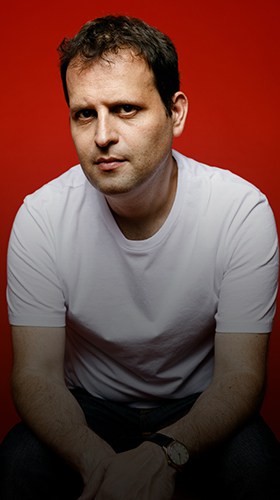
The speaker must have held P&L or operational authority during a period of cultural fragility. Anecdote-holders are common; leaders who made decisions when culture was contested and the organisation's shape was changing beneath them are rare. Adam Pacifico — leadership expert, qualified barrister, Heidrick & Struggles partner, former police officer, and host of The Leadership Enigma podcast — carries exactly this kind of multi-sector operational credibility. His authority is built from practice across institutions with competing cultures and high-stakes environments, not from observing them.
Does their framework survive contact with a sceptical room?
Gallup's State of the Global Workplace data shows that only one in three employees strongly agrees they trust their organisation's leadership, and that managers account for 70% of the variance in team engagement — meaning visible, modelled leadership behaviour, not handbook values, is what actually moves retention.
Senior audiences — HR directors, COOs, restructuring leadership teams — understand this instinctively and probe quickly for the gap between the speaker's model and lived operational reality. A speaker who cannot hold a challenging room is not a culture speaker; they're a conference speaker who happens to have chosen culture as their topic.
Are they building from their own practice, not borrowed cases?
Curated case studies from other organisations travel poorly across audiences. Proprietary experience — the specific texture of decisions made, mistakes absorbed, and change sustained inside an organisation the speaker actually ran — creates the credibility that makes behaviour change credible to the people being asked to change.
Speaker selection in the culture category is not a procurement task. It is wisdom architecture — identifying the specific form of practitioner insight that will produce behaviour change in this audience, at this moment, in this organisation.
When Should You Book a Workplace Culture Speaker
Culture content works hardest when the context creates genuine receptivity. Seven moments consistently deliver that condition:
- Annual offsites and strategy retreats — The moment leaders step back from operations is the highest-leverage point to examine whether stated values are shaping actual decisions; briefs in this format frequently overlap with leadership speakers when the agenda spans both strategic direction and cultural alignment.
- Manager development programmes — Middle managers are the primary transmitters of culture; a speaker who addresses them directly on behavioural mechanisms delivers compounding returns across every team they lead.
- Post-merger and post-restructure all-hands meetings — Culture is most fragile immediately after structural change; a practitioner speaker can reanchor shared identity before disengagement sets in.
- Sales kickoffs and revenue conferences — High-performance culture — accountability, psychological safety, collaborative ambition — has a direct P&L connection that culture speakers can make concrete for commercial teams.
- Industry summits and sector conferences — When peer organisations share a stage, speakers who address sector-specific constraints (regulatory pressure, talent shortage, hybrid mandates) cut through in a way that generic culture content cannot.
- Customer-facing events and partner conferences — External stakeholders scrutinise organisational culture as a proxy for reliability and partnership quality; what happens on stage communicates values as clearly as any handbook.
- Awards ceremonies and recognition events — A culture speaker can reframe recognition as a behavioural signal rather than a reward ritual, giving the occasion strategic weight it rarely carries otherwise.
These moments are not interchangeable. The combination of format, audience seniority, and change stage shapes which of these contexts will produce the greatest behavioural return.
How to Choose the Right Workplace Culture Speaker
The decision is consequential enough to warrant a structured filter — not a shortlist based on availability and profile, but a matching process rooted in what the audience needs to walk away able to do differently.
- Sector fit — Culture speakers who have operated in your sector will understand the specific institutional pressures your audience faces. A culture framework built inside financial services — with its regulatory culture, compliance mindset, and hierarchical decision-making — lands differently than one constructed in a tech scaleup. Generic frameworks do not absorb this distance.
- Practitioner versus commentator — Has the speaker held operational authority during a period of cultural change, or have they primarily studied and reported on culture from the outside? The distinction becomes visible in the Q&A, and senior audiences find it within minutes.
- Format match — A 45-minute keynote sets direction and creates a shared reference point across a large room. A three-hour workshop builds capability and produces outputs. These are different disciplines; a speaker strong in one may not be designed for the other. Establish format before shortlisting.
- Audience seniority — A room of senior leaders needs a speaker who addresses them as peers wrestling with a real constraint. A room of middle managers needs tools they can apply on Monday morning. The pitch, tone, and depth of a culture talk must be calibrated to the specific seniority in the room, not averaged across it.
- Change stage — An organisation at the start of a culture transformation needs a different speaker than one managing culture at scale. Match the speaker's experience to the specific phase of your organisation's journey, not to culture expertise in the abstract.
- Sceptic readiness — Finance leaders, engineers, and operations directors are the culture sceptics most likely to be in the room. Confirm the speaker can engage and hold a challenging audience — not just perform for those already persuaded.
For the full process, from brief to booking, see our complete UK keynote speaker hiring guide.
How Speaker Agency Helps You Find the Right Match
Finding the right workplace culture speaker is not a search exercise — it's an advisory process that begins with the behavioural outcome and works backwards to the practitioner who can credibly produce it.
- Map the wisdom gap. Most culture briefs arrive as symptoms — low engagement scores, retention problems after a restructure, values that exist in a handbook but not in the room. We begin by interrogating what behavioural change the event must actually produce, and what type of practitioner authority will make that change credible to this specific audience.
- Curate the elite voices. From a 300+ UK roster and 1,190+ global network, we identify speakers whose lived operational experience matches the culture challenge on the table — not who delivers the strongest culture keynote in the abstract. Clients receive a reasoned shortlist within 24 hours, with each recommendation explained in terms of audience fit and likely behavioural impact.
- Architect the catalyst moment. We work with the selected speaker and the event team to design the session architecture — the framing, the sequencing, the room format — so that the keynote or workshop functions as a transformation blueprint, not a standalone talk that fades within a week.
- Sustain the momentum. The catalyst moment is the start, not the finish. We support clients in designing post-event follow-on — whether a workshop series, a leadership cohort programme, or a pre-read and reflection guide — so that the behavioural shift the speaker initiates has somewhere to land inside the organisation.
Speaker Agency operates as a Wisdom Catalyst for culture transformation: not entertainment scheduling, but knowledge architecture designed around a specific behavioural outcome. London-based and covering the UK and Europe, with a global network deployed when the brief demands a specific practitioner profile that sits outside our home markets — because the right voice for your culture moment may not be the most available one, and our job is to find it regardless.






 After Dinner Speakers

 Discover Similar Topics