Transformation happens at the intersection of knowledge and action. The demand for digital transformation speakers UK event planners are fielding has shifted decisively — audiences are no longer asking what digital transformation is; they are asking why their programme is stalling and what the organisation needs to change to make it move.
McKinsey research shows approximately 70% of large-scale transformation programmes fail to meet their objectives, and the primary cause is not the technology — it is culture lag, leadership misalignment, and the human capability deficit that accumulates when strategy outpaces understanding.
Around 22% of FTSE 350 boards still lack members with technology and data expertise (Grant Thornton 2024 Corporate Governance Review), with only 7% reporting board-level AI capability — which means authoritative external voices are a direct input to strategy, not a motivational afterthought. Speaker Agency doesn't source speakers who describe transformation — we architect the wisdom transfer that makes it move.
Why Hire a Digital Transformation Speaker for Your Event
The commercial case for a digital transformation speaker is not inspirational — it is actuarial. Approximately 70% of large-scale transformation programmes fail to meet their objectives, with human and organisational factors — not technical failure — cited as the primary cause. Boards that treat a keynote speaker as a motivational warm-up are misreading the risk; the right voice, at the right moment, addresses precisely the failure modes that project teams cannot see from inside the programme.
AI-Accelerated Transformation has compressed what were once multi-year roadmaps into urgent re-sequencing decisions. GenAI capability layers are arriving before most organisations have resolved their legacy estate — and C-suite audiences need speakers who can explain, concretely, what AI integration actually demands from their operating model, their data architecture, and their people. The demand for AI speakers has risen sharply as a sub-category of DX briefs precisely because organisations need the technology argument and the transformation argument made in the same room, at the same time.
Culture and Change as the Limiting Factor is the angle that HR directors and People leads are booking most urgently. Technology deployment consistently outpaces organisational readiness in UK programmes — the ERP goes live, the cloud migration completes, and then the adoption curve flatlines. Speakers who address the cultural seam — the gap between the system going in and the behaviour changing — are in demand for town halls, leadership offsites, and change activation events where the technical implementation has stalled and the human question has been left unasked.
Industry-Specific Transformation Pressure explains why sector-credentialled speakers close faster and command premium fees. Financial services, healthcare, and retail are the three UK verticals where DX speaker briefs concentrate most heavily. A speaker with verifiable fintech or health-tech experience answers the scepticism in the room before the Q&A starts — generic transformation frameworks do not survive contact with a risk officer who has lived a failed programme.
The choice of speaker angle determines the conversation your event will have. Get that angle wrong, and the room will receive a description of transformation rather than a catalyst for it.
What Sets a Great Digital Transformation Speaker Apart
The difference between a speaker who describes transformation and one who has executed it is audible — within the first three minutes, under questioning from a sceptical CFO or a change-fatigued middle manager.
Have they led a transformation inside a real organisation?
A speaker who has carried P&L responsibility through a technology-driven change programme can answer questions that a strategist cannot — questions about sequencing trade-offs, political resistance, and the decisions that had to be reversed at pace. Commentary on transformation is plentiful; the operator's perspective from someone who has actually run a programme under pressure is scarce and commands the room differently.
Can they address both the technology and the human layer?
Most DX programmes break at the cultural seam, not the technical one. A speaker who treats AI integration and change leadership as separate topics is delivering half a brief. The audiences that walk away with answers — rather than slogans — have heard someone hold both layers simultaneously and show how they interact.
Do they hold sector-specific credibility?
Generic transformation frameworks travel poorly to financial services risk officers, NHS trust executives, or retail operations directors who face distinct regulatory and structural pressures. Vertical expertise closes the credibility gap before the speaker reaches the main argument.
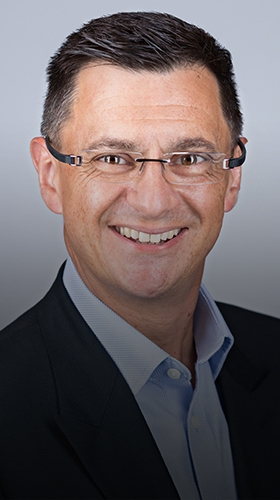
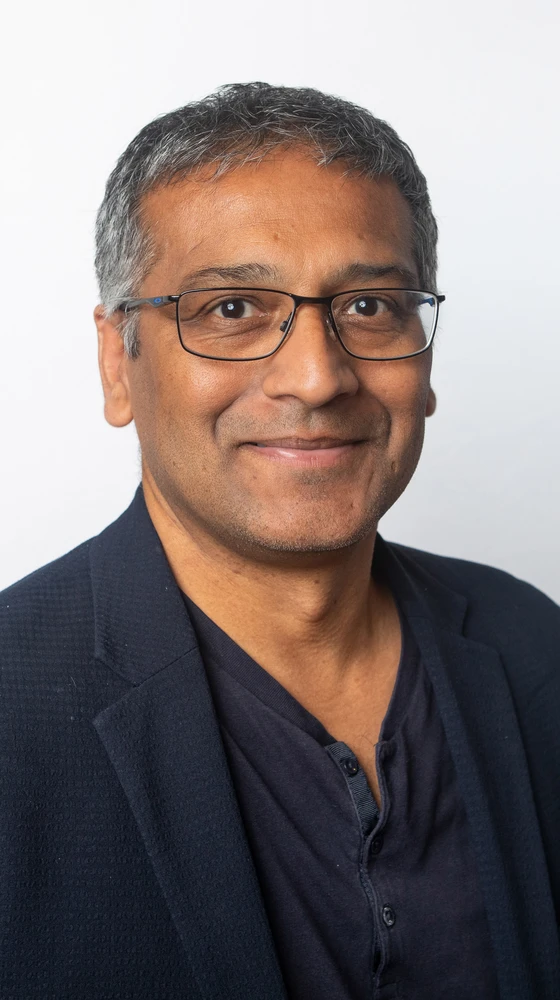
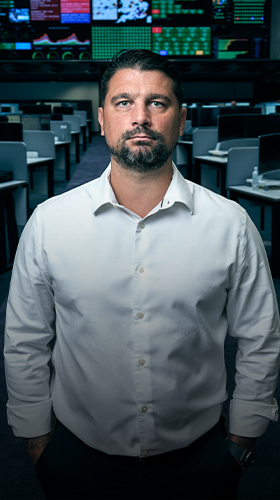
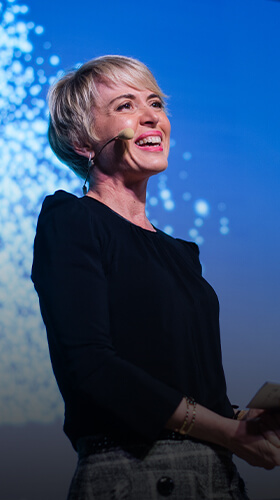
Allister Frost — former Microsoft Head of Digital Marketing Strategy, with more than twenty years advising enterprise organisations on digital change — brings the "Future-Ready Mindset" framing that addresses cultural readiness directly, built from corporate implementation rather than advisory distance. Aditi Subbarao, Global Financial Services and Strategic Partnerships Lead at Instabase, advises major financial institutions on AI adoption in live transformation contexts — she represents both the AI-accelerated DX angle and the financial services vertical in a single brief.
When the DX brief overlaps with single-transition management, our change management speakers may be the more precise match — the distinction matters before briefing candidates. What Speaker Agency is solving, in either case, is not a casting problem. It is a wisdom architecture problem — designing the knowledge encounter that moves an organisation from comprehension to conviction.
When Should You Book a Digital Transformation Speaker
If your event maps to any of the following scenarios, the case for a digital transformation speaker is already made.
- Annual Technology or Digital Strategy Conference — Aligns leadership on shared priorities and creates common language across functions before programme budgets are committed.
- Board and C-Suite Strategy Retreats — Provides authoritative external perspective on where the organisation's transformation programme sits relative to sector peers and global benchmarks.
- All-Hands or Town Hall Change Events — Translates technical change — ERP rollouts, cloud migrations, AI deployments — into human consequence for a workforce audience that needs to understand, not just comply.
- Sales Kickoffs — Equips commercial teams to understand how digital transformation is reshaping buyer behaviour, decision cycles, and competitive dynamics in their sector.
- Leadership Development Programmes — Builds digital literacy and transformation capability in mid-to-senior leadership pipelines; speakers deliver frameworks and evidence of what good looks like, not just aspiration.
- Innovation Days and Hackathons — Contextualises the organisation's experimentation agenda within the broader transformation landscape; works well as an opening keynote that sets stakes or a closing one that converts energy into commitment.
- Industry Summits and Trade Events — Addresses sector-specific transformation trends — fintech, healthtech, retail disruption — for mixed audiences of practitioners, buyers, and investors.
The World Economic Forum's Future of Jobs Report 2025 estimates that 59% of the global workforce will require training by 2030 — driven directly by AI, big data, and cloud adoption — which means workforce transformation events are a live operational priority, not a deferred L&D consideration.
Topics Our Digital Transformation Speakers Cover
Digital transformation is not a single subject — it is a cluster of interconnected imperatives, and the brief that lands well depends on which cluster your event is actually addressing.
- AI integration and legacy modernisation — The dominant 2026 board agenda: how to layer AI capability onto existing technology estates without re-platforming the entire organisation. Speakers here address sequencing, vendor selection, and the operating model changes that AI adoption demands.
- Data strategy and analytics — Moving from data collection to decision-grade data. Relevant for organisations with significant data assets that have not yet produced commercial or operational advantage from them.
- Workforce digital capability and upskilling — The human-side imperative: building the skills, confidence, and behavioural change needed for technology adoption to take hold beyond early adopters and into the whole organisation.
- Cloud architecture and platform decisions — The build/buy/partner calculus for organisations mid-migration; particularly relevant for FTSE 350 and public sector audiences making multi-year infrastructure commitments.
- Customer experience re-architecture — How digital transformation changes the end-to-end customer journey in retail, financial services, and healthcare — where the gap between digital ambition and customer reality is most commercially exposed.
- Cybersecurity within transformation — Risk surface expansion as a direct consequence of digital change; a critical angle for CISOs and boards managing transformation velocity against their security posture.
- Change leadership and organisational culture — Why transformation programmes break at the cultural seam and what leaders can do about it before the next programme review surface the damage.
If your brief sits across more than one of these clusters, that is not a problem to resolve before calling us — it is the starting point of the conversation.
How to Choose the Right Digital Transformation Speaker
The right speaker profile depends on where your organisation sits in its transformation journey — strategy-setting, mid-implementation, or recovering from a stalled programme — and those three phases need fundamentally different voices.
- Sector fit — Does the speaker hold verifiable experience in your industry's specific transformation context, or are their examples drawn from other verticals? Ask for two or three sector-specific case references before shortlisting.
- Practitioner versus commentator — Has this person actually run or led a digital transformation inside an organisation, or do they analyse transformations from outside? The distinction surfaces immediately when an engineering team or risk function starts pushing back.
- Format match — A 45–60 minute keynote and a 2–4 hour facilitated workshop serve fundamentally different objectives. Confirm which your event actually needs before briefing candidates — many organisers discover mid-briefing that they need a workshop but have budgeted and scheduled for a keynote.
- Audience seniority and technical fluency — A board-level audience and a middle-management audience require different depth, vocabulary, and challenge levels. A speaker calibrated for one will underperform for the other.
- Time horizon — Is your organisation in the strategy-setting phase, the implementation phase, or the recovery-from-stalled-transformation phase? Each phase calls for a different speaker profile — inspirational framing works in phase one; operational credibility matters more in phases two and three.
- Sceptic readiness — Can the speaker hold a room of engineers, risk officers, and change-fatigued managers who have heard transformation promises before? Ask for evidence of how they handle hostile Q&A — not assurances that they can.
Fees for digital transformation speakers start at £5,000, with most UK corporate bookings landing between £5,000 and £25,000 depending on practitioner seniority and sector specificity. Internationally recognised names and FTSE-level practitioners reach £50,000. For the full breakdown of what determines speaker fees, see our guide on how much a digital transformation keynote speaker costs in the UK.
How Speaker Agency Helps You Find the Right Match
Finding the right digital transformation speaker is a brief-design problem before it is a search problem. Here is how we solve it.
- Map the wisdom gap. Our conversation begins with the honest question your transformation team hasn't asked in the project meeting — where is the programme actually stalling, and what does your leadership need to hear that they currently cannot receive from inside the organisation? That gap is the brief.
- Curate the elite voices. From our 300+ UK roster and 1,190+ global network, we identify speakers whose transformation credentials match your sector, your audience's seniority, and the specific phase your organisation is in — whether that is strategy, implementation, or recovery. You receive a curated shortlist within 24 hours.
- Architect the catalyst moment. We do not hand you a name and step back. We co-design the transformation blueprint — format, narrative arc, audience brief, and the critical moments where the room needs to shift from comprehension to conviction.
- Sustain the momentum. The keynote is the ignition, not the destination. We advise on follow-on workshop design, leadership cohort sessions, and the internal communication strategy that converts a catalyst moment into durable organisational change.
Speaker Agency operates across the UK, Europe, and Türkiye — connecting organisations at every stage of digital transformation with voices that move knowledge from boardroom ambition to operational reality. We are not a speaker directory. We are a Wisdom Catalyst: the strategic partner that designs the knowledge encounter your programme actually needs, then makes certain it lands.







 After Dinner Speakers

 Discover Similar Topics