


 After Dinner Speakers

 Expert on Online Radicalisation, Disinformation & Threats to Democracy | University of Oxford | Co-Executive Director, ISD | Bestselling Author

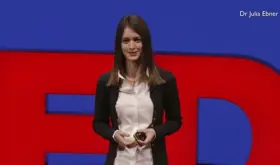


















Trust in science, the media and democracy has been dwindling in recent years. But in this new era of misinformation and distrust, the private sector has been a rare source of hope: according to the Edelman Trust Barometer, private sector firms and employers enjoy the highest trust levels in society. Julia addresses what drives the enemies of science and democracy, why we are more susceptible to conspiracy myths and disinformation in a world of growing uncertainty, and what companies and institutions can do to reverse the trend and restore trust.
Making Sense of the Insentient: AI, Targeted Disinformation Campaigns and Conspiracy Myths
The risk of systematic disinformation campaigns that lead to delegitimisation, hate and agitation has been aggravated by the next generation of technologies. From Large Language Models and deep fakes to Decentralised Autonomous Organisations in the metaverse, Julia sets out what these technologies mean for organisations from both a reputational and a security perspective, and what leaders can do to prevent campaigns directed at their brand, their employees or their activities.
Going Dark: Understanding Extremists
By day, Julia Ebner worked at a counter-extremism think tank, monitoring radical groups from the outside. In her spare hours — late nights, holidays and weekends — she adopted five different identities and joined a dozen extremist groups from across the ideological spectrum. Based on those undercover investigations, Julia shows how extremists have expanded their reach using cutting-edge technology, attracted the youngest generations by gamifying their communication, and shaped politics through surprising coalitions.
Going Mainstream: Managing Societal Polarisation
Incels. Anti-vaxxers. Conspiracy theorists. Neo-Nazis. These groups once belonged on the fringes of the political spectrum. Today, accelerated by a pandemic, global conflict and rapid technological change, their ideas are becoming widespread. Drawing on the undercover work behind her book Going Mainstream, Julia explores why outlandish ideas have taken hold, why conspiracy myths spread faster than ever, and how radicalised individuals — united by grievance and scepticism towards institutions — are influencing the mainstream like never before.
Threats to Democracy and Liberalism: The Rise of Populist and Authoritarian Regimes
From Donald Trump’s resurgence in the United States to the growing influence of far-right populist parties across Europe and the UK, liberal democracy is facing its greatest test in decades. Populist and authoritarian movements are eroding democratic norms, polarising societies and reshaping global politics. Julia examines why certain populations are more susceptible to illiberal appeals, what new patterns are emerging across regions, how these forces threaten open markets, institutions and the rule of law, and what business leaders can do to defend democracy.
Geopolitics and International Security: Mapping the Drivers of Global Instability
Interstate wars, civil conflicts and mass violence remain among the most urgent global threats, yet the international community repeatedly fails to anticipate when and where crises erupt. Drawing on big data analysis and interdisciplinary research, Julia sheds light on emerging dynamics in international security: the early warning signs that signal escalation, the patterns in the psychology and behaviour of violent leaders that can inform forecasting and geopolitical risk assessment, and why people follow violent leaders even when it leads to devastation.