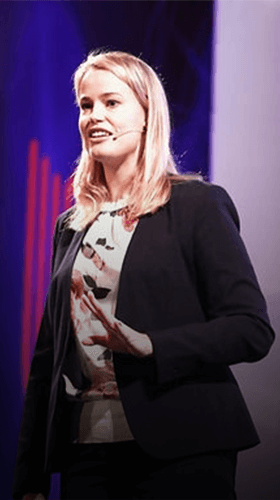
Transformation happens at the intersection of knowledge and action. The demand for motivational speakers for schools in the UK has shifted — headteachers and trust CEOs are no longer booking external speakers as an inspirational flourish; they are booking them to address documented gaps that pastoral staff, however committed, cannot close alone.
NHS England data shows 1 in 5 children aged 8–16 had a probable mental health disorder in 2023, up from 1 in 9 in 2017 — and that figure rises to 1 in 4 among 17–19 year olds. OFSTED scrutiny and the RSHE statutory guidance refresh have given welfare provision a harder inspection edge.
The Education Endowment Foundation's evidence base on social and emotional learning has given trust boards a measurable, budgetary justification to act. Speaker Agency doesn't source a name and step back — we architect the wisdom transfer that connects the right voice to the right student body at the right moment in the school year.
Why Hire a Motivational Speaker for Your School
The case for an external speaker in schools is institutional before it is inspirational.
Mental health and welfare mandate sits at the centre of every serious school improvement plan in 2026. According to NHS England's 2023 Wave 4 data, 1 in 5 children aged 8–16 had a probable mental health disorder in 2023, up from 1 in 9 in 2017. Among 17–19 year olds, the figure is 1 in 4.
OFSTED's inspection framework and the updated RSHE statutory guidance mean schools face direct scrutiny on how student wellbeing is addressed — not just documented. A speaker with lived experience of mental health struggle, adversity or exclusion delivers something a PSHE lesson cannot: biographical authority that students in Key Stage 3 and 4 recognise as real, because it is.
Aspiration and social mobility are where external voices do work that internal ones structurally cannot. In schools where teacher career networks are narrow and professional role models from non-traditional backgrounds are absent, an external speaker expands students' awareness of what is achievable. Speakers from STEM careers, entrepreneurship, disability advocacy and community action demonstrate life trajectories that are simply invisible in many secondary school environments — and for schools operating in low social-mobility areas, that visibility is itself a pastoral intervention.
The biographical authority gap is the reason external speakers work in schools in ways internal delivery often does not. A member of staff, however skilled, cannot speak from the position of someone who was excluded from school, became a Paralympic medallist, or rebuilt a professional life after serious injury. That specific, verifiable life experience creates a credibility with students that no pastoral training programme produces.
The choice of speaker angle matters before the choice of speaker name — get the angle wrong and the most polished delivery lands as performance rather than permission.
What Sets a Great Motivational Speaker for Schools Apart
The distinction between a great conference speaker and a great school speaker is not profile — it is biographical relevance to the students in the room.
Do they have first-hand experience of what students face?
The strongest speakers for secondary schools and sixth forms don't describe adversity from a distance; they have lived it in ways a Year 10 student can interrogate. Academic credentials and corporate career highlights — the markers that work for an inspiring speakers brief at a corporate conference — mean little to a disengaged GCSE cohort or an overwhelmed A-level student.
Alexandra Adams, on track to become the UK's first deafblind doctor in 2026 and a former elite GB athlete across two sports, carries precisely this form of authority. Her story is not a polished narrative about resilience in the abstract — it is a specific, ongoing, verifiable account that students can push back on, question and ultimately believe.
That is a different quality of catalyst moment from anything a commentator can produce.
Does their background satisfy safeguarding due diligence?
School bookings carry procedural obligations that conference bookings do not. Any speaker with unsupervised access to students requires current enhanced DBS clearance — this is a statutory requirement, not a preference. Ben Lindsay OBE, CEO of Power The Fight, PhD candidate at Durham University and bestselling author, has a sustained record of direct work with young people affected by violence and exclusion. His OBE, academic standing and established school-context track record mean designated safeguarding leads and governors can assess his profile with confidence.
Can they adjust for a mixed-age room?
A whole-school assembly may place Year 7 students and sixth-formers in the same hall. A speaker calibrated for a corporate audience — or even a sixth-form-only event — will lose Key Stage 3 students in the opening minutes. The ability to modulate register, vocabulary and example in real time across age groups is a distinct skill that should sit in the selection brief from the start.
Selecting a school speaker is not a speaker-matching exercise — it is wisdom architecture. The right speaker, booked for the right moment in the school calendar, briefed with precision on the student body and pastoral context, creates a catalyst moment that the school's pastoral team can build on long after the assembly ends. Speaker Agency's role is to design that architecture, not supply a name from a list.
When Should You Book a Motivational Speaker for Your School
Timing and context shape whether a speaker session becomes a catalyst or a calendar event that passes without consequence.
All-school assemblies — Whole-school events requiring a speaker who can hold Year 7 through Sixth Form simultaneously; tonal range and age-modulation are essential selection criteria.
Sixth form and GCSE revision motivation days — Pre-exam periods where documented anxiety and motivation dips make adversity and resilience speakers the highest-converting format.
Careers days and aspirations events — Particularly relevant in schools participating in Gatsby Benchmark or Careers & Enterprise Company programmes; speakers from STEM, entrepreneurship and non-traditional careers expand the horizon most effectively.
Anti-bullying and wellbeing weeks — Aligned to national campaigns such as Anti-Bullying Week and Children's Mental Health Week; speakers with lived experience of exclusion, discrimination or mental health challenges are the appropriate profile. Schools with a specifically welfare-focused brief may also want to explore mental health speakers for schools.
Multi-Academy Trust INSET days — Trust-wide staff development events where a motivational speaker addresses teaching professionals on resilience, wellbeing and professional purpose; a distinct tonal register from student-facing sessions is required.
Student leadership and prefect training — Year 12/13 or student council cohorts preparing for leadership roles; entrepreneurship, community action and public-speaking backgrounds are most effective here.
Prize-giving and graduation ceremonies — Formal recognition events where a keynote provides an aspirational close to the academic year; higher-profile speakers with public visibility are typically preferred.
The EEF evidence base confirms that social and emotional learning interventions deliver +4 months additional learning progress on average, with external delivery models explicitly identified as a valid approach — giving trust boards and governors the evidence framing to justify a booking across most of these contexts.
How to Choose the Right Motivational Speaker for Your School
A school speaker booking is a procurement decision with pastoral consequences — these criteria give you a defensible framework before the shortlist conversation begins.
Topic alignment with your school improvement plan — Is the speaker's message connected to a specific priority in the school's development plan: attendance, aspiration, wellbeing, or behaviour? A thematic match gives the booking strategic legitimacy, not just motivational appeal, and is far easier to defend to governors.
Age-range fit — Primary, secondary, sixth form and mixed-age audiences each require a different register, vocabulary and example set. Confirm the speaker's standard delivery context before shortlisting — a speaker whose portfolio is exclusively corporate keynotes is not automatically transferable to a Key Stage 4 audience.
Format match — A 45-minute keynote assembly, a half-day workshop, a full-day programme and a trust INSET keynote are not interchangeable. The speaker's preparation, brief and fee structure differ for each; clarify format early and build the shortlist around it.
Practitioner versus commentator — Does the speaker have lived experience of the topic, or a professional qualification in it? For school audiences, biographical authenticity carries disproportionate weight. The distinction between someone who has rebuilt a life after serious adversity and someone who has researched resilience is not subtle to a Year 10 student.
Fee range transparency — School budgets are fixed and require governor sign-off. Fees for motivational speakers in schools typically start from £5,000, with most engagements falling between that floor and £25,000 depending on speaker profile and format. For a full breakdown of how how much a keynote speaker costs in the UK is structured, the fee guide covers the variables in detail.
Safeguarding and DBS considerations — Any speaker with unsupervised access to students in a UK school requires current enhanced DBS clearance. Raise this at the initial briefing call; it is a standard procedural requirement and should be confirmed, not assumed.
How Speaker Agency Helps You Find the Right Match
Every school brief is different — a trust CEO managing exclusion rates and a SENCO planning a wellbeing week are not looking for the same speaker. Our process is built around that specificity.
Map the wisdom gap. Every school has a different student profile, pastoral priority and calendar pressure. Before recommending a single speaker, we establish what your students specifically need — resilience for exam-year anxiety, aspiration for a low-mobility cohort, belonging for a school managing exclusion rates — and we match the speaker to that gap, not to a generic motivational brief.
Curate the elite voices. With a 300+ UK roster and 1,190+ global network, we draw on practitioners — from deafblind doctors and decorated community leaders to Paralympic athletes and published researchers — and deliver a targeted shortlist within 24 hours of your brief.
Architect the catalyst moment. We work with you and the speaker to design a transformation blueprint for the event: format, timing within the school calendar, pre-event briefing for pastoral staff, and age-appropriate delivery structure — so the session lands as a genuine catalyst moment rather than an assembly students have forgotten by the final period.
Sustain the momentum. A single speaker session is the start, not the end. We advise on follow-on resources, repeat booking structures for INSET days, and how to embed the themes from the keynote into year-group work or tutor-time conversations in the weeks after the event.
Speaker Agency operates as a Wisdom Catalyst, not a speaker directory. Our reach spans the UK, Europe and beyond — and for school bookings specifically, that means access to practitioners whose stories carry direct relevance to the students in the room, curated and briefed by a team that understands both the educational context and the strategic wisdom architecture required to make the session matter.







 After Dinner Speakers

 Discover Similar Topics