Transformation happens at the intersection of knowledge and action. The organisations booking Women's Day Speakers UK in 2026 have moved well past the question of whether to mark International Women's Day — they are asking what structural shift the event is meant to produce. With the Worker Protection (Amendment of Equality Act 2010) Act now in full effect and the April 2026 gender pay gap reporting deadline bearing down on every employer with 250 or more staff, IWD is the first year where booking the right speaker functions simultaneously as a cultural investment and a compliance signal. The event planner who treats this as a scheduling task will fill a slot. The one who treats it as a strategic decision will change how their organisation thinks and operates for the rest of the year. Speaker Agency doesn't fill an IWD slot — we architect the wisdom transfer that makes your organisation demonstrably different on 9 March than it was on 7 March.
Why Book a Women's Day Speaker for Your Event
IWD programming lands differently when the brief is built around evidence rather than aspiration.
Pipeline parity and the broken rung is the structural argument that reframes this from a celebration into a leadership intervention. According to Women in the Workplace 2024, for every 100 men promoted to manager, only 81 women are promoted. That gap at first promotion is not a pipeline leak further up — it is the source. Organisations investing in IWD programming without addressing this mechanic are treating the symptom; the right speaker makes the mechanic visible and gives senior stakeholders a usable model for correcting it.
Compliance and positive duty adds a second, legally grounded reason to prioritise the speaker brief. The Worker Protection Act 2023 creates a positive duty on employers to prevent workplace harassment — not simply to respond when it occurs. IWD events have become a credible vehicle for the kind of culture-change briefing that satisfies this duty in practice: they put prevention frameworks, bystander action, and senior accountability on the table in a format that reaches the whole workforce at once. Approached with the right speaker, this is an enabling investment, not a defensive box-tick.
Pay gap reporting as a booking trigger completes the picture for organisations with 250 or more employees. The April 2026 deadline concentrates attention on how leadership communicates equity progress — internally to staff and externally to the market. An IWD event scheduled in late February or early March creates a natural moment to frame that narrative with authority before the statutory data lands. Professional services firms and FTSE-listed companies are increasingly sequencing their speaker bookings with this calendar logic in mind.
The organisations that convert IWD events into measurable culture change are the ones who treat speaker selection as a strategic decision from the outset — or who work with female motivational speakers as part of a broader female speaker programme that extends beyond the single occasion.
What Sets a Great Women's Day Speaker Apart
The gap between a speaker who has lived the experience and one who describes it from a distance is audible inside the first five minutes — and a senior, mixed audience will close the door on the latter before the first Q&A question is asked.
Have they done it, or do they describe it?
A speaker who has built a company in a male-dominated sector, led policy reform, or held P&L responsibility brings the kind of firsthand authority that no amount of research replicates. The audience question a practitioner can answer — "what did you actually do when the board pushed back?" — is the one a commentator cannot. This distinction matters most in rooms where scepticism is polite but present.
Can they hold a room that includes sceptics?
IWD audiences in large corporate settings frequently include senior male stakeholders for whom the topic carries political weight. A speaker with cross-sector credibility, regulatory experience, or visible business outcomes can hold that room — not by softening the argument, but by making it unanswerable. Speakers without this register tend to resonate with the already-converted and lose the room's less committed half.
Do their credentials match your event's specific sub-theme?
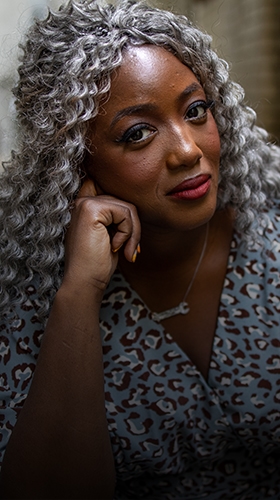
The five content territories covered in H2.4 each require a different kind of expertise. Dr Anne-Marie Imafidon MBE — founder of Stemettes and one of the UK's most recognised advocates for women in technology — brings first-hand STEM career-building and large-scale programme delivery credentials that are irreplaceable for Women in Tech events. According to WISE Workforce Statistics 2024, women make up just 29% of the UK's core STEM workforce; a speaker without direct experience of that environment will not move that number. For the economic parity and leadership sub-angle, Adrienne A. Harris — former Special Assistant to President Obama for Economic Policy and Superintendent of the New York State Department of Financial Services — brings board-level authority at the intersection of fintech, financial health, and women's economic power that is simply not available from a speaker who has only studied those fields.
The selection logic here is wisdom architecture, not speaker selection — the goal is to identify the voice whose specific experience closes the precise gap your audience carries into the room.
When Should You Book a Women's Day Speaker
"Women's Day speaker" describes a booking occasion, not a single event format — and the seven formats below each require a materially different speaker profile.
International Women's Day keynote (8 March) — standalone company-wide event, typically 300–2,000 attendees in large corporates; requires a speaker who can command scale and leave a single, resonant message that the audience carries out of the room.
Annual D&I conference or Women's Network summit — internal ERG event spanning graduate to C-suite; the speaker must hold cross-level authority without losing either end of the room; typically sits within a broader diversity and inclusion speakers programme.
Women in Leadership development programme launch — HR/L&D context; practical frameworks on sponsorship, executive presence, and career navigation carry more weight here than purely aspirational content.
Women in Tech / STEM-focused conference — common in financial services tech, engineering firms, and government digital teams; operator or founder credentials in tech are essential for credibility with this audience.
Pay gap reporting cycle communications event — April-deadline-adjacent internal or external panel; policy, regulation, or economic expertise is required; this is a precision brief, not a general IWD brief.
Gender-based violence / safe workplace awareness day — compliance-adjacent; clinical, survivor-advocacy, or policy credentials are required; this brief should not be scoped alongside motivational content.
All-staff wellbeing and resilience day — IWD used as a hook for broader wellbeing investment; burnout-specialist and mindfulness-credentialled speakers are most booked in this format; often paired with half-day workshops.
The formats above combine in practice — an all-staff keynote followed by a Women's Network breakout, for instance — and the most effective shortlists account for the full day's arc, not just the headline slot.
Topics Our Women's Day Speakers Cover Most Often
IWD programming spans five substantively different content territories, and the most effective speaker brief starts with identifying which one applies.
Leadership & Pipeline covers sponsorship versus mentorship distinctions, the mechanics of the promotion gap, executive presence frameworks, and the practical design of gender-diverse talent pipelines. This territory resonates most strongly with professional services firms, FTSE-listed companies, and corporate HR audiences. The signal question: does your brief ask the speaker to change how senior leaders identify and sponsor talent, or to inspire individual women to self-advocate? The answer points to a very different speaker profile.
Women in Technology & STEM covers digital inclusion, career navigation in male-dominated fields, and role-model storytelling with operator credibility. Strongest fit for tech firms, financial services, and government digital teams. The signal question: does the speaker need to have actually built or shipped something in a technical environment, or is sector fluency sufficient? For engineering-heavy audiences, the former is rarely negotiable.
Economic Power & Entrepreneurship covers pay equity, financial literacy, female founder journeys, and access to investment. Strongest fit for financial services events, entrepreneurship-focused programming, and policy audiences. The signal question: is the speaker's authority rooted in policy expertise, personal founder experience, or investment-side credibility? Each plays differently with a given room.
Wellbeing & Sustainable Ambition covers burnout prevention, mental load, resilience frameworks, and sustainable high performance. Strongest fit for CHRO-led events, healthcare, education, and public sector organisations. The signal question: does your audience need clinical rigour, or lived-experience resonance? For healthcare and education audiences, these are not interchangeable.
Gender-Based Violence & Workplace Safety covers bystander training, awareness, survivor storytelling, and policy compliance. This territory is handled only by speakers with clinical, advocacy, or policy credentials, and it functions as a stand-alone awareness brief — it is not a sub-segment of a motivational or leadership event. The signal question: has the organisation specifically scoped this as a safe-workplace compliance brief, or has GBV content been added to a general IWD programme without a deliberate decision? The distinction matters for both the speaker brief and the audience experience.
How to Choose the Right Women's Day Speaker
IWD speaker matching is more complex than a standard keynote brief — the sub-theme, audience seniority, and desired post-event action all narrow the candidate pool significantly before a single name is considered.
Sub-theme specificity — which of the five content territories above matches your brief? A speaker with a commanding track record on leadership pipeline is not automatically the right voice for a safe-workplace awareness session; conflating these produces a speaker who is credible in neither register.
Practitioner versus commentator — has the speaker held P&L responsibility, built a company, led policy reform, or carried the professional experience they are speaking about? The practitioner-versus-commentator distinction is more consequential for IWD briefs than for most corporate keynotes, because the audiences who attend these events have lived the subject matter and will notice the difference.
Audience seniority and sceptic readiness — a room of senior executives navigating pay gap reporting requires a different authority register than a Women's Network event for mid-career women. Confirm the speaker has held both kinds of room; ask for evidence rather than assurances.
Format match — a 45–60-minute keynote, 90-minute panel anchor, and 2–4-hour workshop are not interchangeable briefs. Shortlisting a keynote speaker for a workshop delivery role is one of the most common and most avoidable briefing errors.
Time horizon — for an IWD keynote, is the desired outcome a single resonant moment, or is this the opening session of a multi-event learning programme? The answer changes the speaker type and the content brief in ways that are not recoverable after confirmation.
Budget clarity — most Women's Day speaker bookings sit between £5,000 and £25,000; understanding how much a keynote speaker costs in the UK before briefing avoids shortlist misalignment and saves several rounds of back-and-forth once names are on the table.
Choosing correctly is itself a strategic act — the transformation blueprint for your event is determined as much by the precision of the brief as by the calibre of the speaker.
How Speaker Agency Helps You Find the Right Match
The IWD brief is one of the most specific in the corporate calendar — and specificity is where most shortlist processes break down.
Map the wisdom gap. For IWD events, this means establishing what your audience needs to leave differently — whether that is a new mental model for pipeline sponsorship, a clearer understanding of their legal duty under the Worker Protection Act, or a resilience framework they can apply the following week. The wisdom gap is rarely "inspiration"; it is almost always something more precise.
Curate the elite voices. We draw from a 300+ UK roster and 1,190+ global network to shortlist the speakers whose specific practitioner credentials, sector fluency, and audience calibration match your brief — delivered within 24 hours of your enquiry.
Architect the catalyst moment. We build the transformation blueprint around your event: format, sequencing, pre-event briefing, and the questions that ensure your speaker's content lands as an organisational shift rather than a well-received talk.
Sustain the momentum. IWD events have a short cultural half-life if the insight stops at the room door; we advise on post-event framing, follow-on programming, and how to connect the keynote to your wider D&I or leadership development calendar.
Speaker Agency operates as a Wisdom Catalyst — a Knowledge Architect and Strategic Advisory Partner, not a speaker directory. Our reach across the UK, Europe, and Türkiye means we can source the precise voice for any IWD audience, at any scale, in any format. The organisations that leave IWD 2026 with something measurably different are the ones who started with a wisdom architecture conversation, not a speaker list.






 After Dinner Speakers

 Discover Similar Topics