Your next breakthrough is one wisdom transfer away. The conversation around Blockchain Speakers UK has shifted decisively — in the first quarter of 2026, financial-services firms, FTSE 250 innovation leaders, and payments strategy teams all reached the same conclusion: blockchain is no longer a future-state discussion.
The FCA's financial promotions regime for cryptoassets came into force in October 2023; the Bank of England's digital pound is in active design; and CBDC timelines are now board-reported items inside UK financial institutions. The speakers your audience needs in 2026 are not technology evangelists — they are practitioners who can translate regulatory architecture, enterprise deployment reality, and digital asset strategy into decisions an organisation can act on Monday morning.
Speaker Agency architects that wisdom transfer; we do not simply fill a keynote slot.
Why Hire a Blockchain Speaker for Your Event
Blockchain arrived on FTSE boardroom agendas not because of hype, but because regulation and commercial pressure arrived simultaneously.
Regulatory & Governance Readiness is the angle that changed the room. The FCA's financial promotions regime for cryptoassets came into force in October 2023, requiring every firm communicating crypto promotions to UK consumers to be FCA-authorised or approved by an authorised firm. That single policy shift converted blockchain from a technology discussion into a board-level compliance obligation for UK financial institutions, insurers, and payments firms.
A speaker who can explain what that regime demands — and what the ongoing authorisation roadmap means for business model decisions — walks financial-services, legal, and risk audiences out of the room with a concrete action list rather than a vocabulary lesson. For organisations also tracking broader digital finance strategy, our fintech speakers roster maps the wider landscape where blockchain and open banking intersect.
Enterprise Blockchain in Practice is the angle that separates serious events from whitepaper panels. Trade finance, supply chain provenance, tokenised real-world assets, and cross-border settlement are the operational territories where UK corporates are already running pilots — not proof-of-concepts, but live production deployments. A speaker who has sat inside those deployment cycles can articulate where the technology delivers and where it fails, giving CTOs, CDOs, and procurement leads the operator's perspective rather than a vendor's pitch deck.
Crypto, Digital Assets & the Future of Money makes blockchain relevant to general conference audiences and financial-services summits alike. Spot Bitcoin ETFs, sovereign wealth fund exposure, stablecoin regulation, and the UK's CBDC design phase have collectively made the "future of money" framing credible — not speculative. Audiences that would have dismissed this angle three years ago are now asking how their treasury, payments infrastructure, and custody arrangements need to adapt.
The sub-angle your audience needs determines the speaker profile you should shortlist — and getting that match wrong produces a session the room tolerates rather than one they act on.
What Sets a Great Blockchain Speaker Apart
Not every speaker who covers blockchain has the depth to hold a room of regulators, risk officers, and sceptical CFOs simultaneously.
Have they advised institutions or regulators?
The benchmark here is not conference appearances — it is whether the speaker has sat across a table from a central bank, an FCA working group, or a Treasury consultation process and contributed to the outcome. The Bank of England's digital pound consultation specified that the CBDC system must handle 30,000 transactions per second at peak — that is infrastructure-scale policy design, not experimental theory.
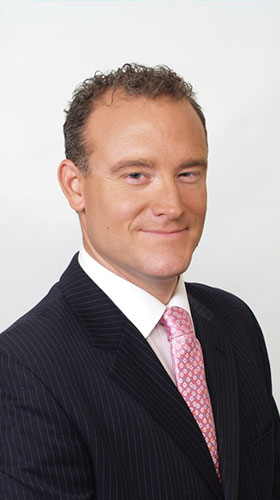
David Birch, a global advisor on CBDC architecture, digital money, and tokenised identity, has briefed central banks and regulators on precisely these questions. His depth maps directly to the decisions UK financial institutions are making now. A speaker with that advisory background answers Q&A questions that a strategist or commentator simply cannot.
Can they translate distributed ledger mechanics for a non-technical boardroom?
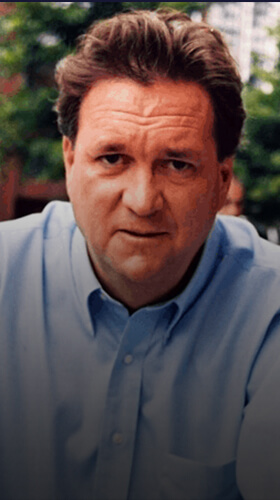
Domain depth and communicative range are not the same skill, and many technically authoritative speakers lose half the room in the first ten minutes. Glen Goodman — former BBC and ITV business correspondent and an active cryptocurrency trader — demonstrates that these two qualities are not mutually exclusive. His crossover credibility works for financially sophisticated audiences and general conference attendees alike: the mechanics become legible without becoming shallow. An event that pairs genuine expertise with that kind of delivery reaches decision-makers, not just enthusiasts.
Do they address both the commercial opportunity and the regulatory risk?
Blockchain audiences in 2026 are not looking for advocacy — they have read the failure cases. A speaker who can hold the tension between enterprise ROI and regulatory exposure, between DeFi's institutional potential and its documented risks, earns the trust of the risk-literate audience members who would otherwise disengage. That balance is what converts a keynote into a catalyst moment.
Speaker Agency curates wisdom architecture — every blockchain speaker on our shortlist is chosen for the precision of the wisdom transfer they can execute for your specific audience, not for the familiarity of their name on a programme.
When Should You Book a Blockchain Speaker
Blockchain briefs arrive from a wider range of event formats than most technology topics — here are the contexts where the investment is most clearly justified.
Financial Services Innovation Days — Banks, insurers, and asset managers running internal strategy sessions on digital assets, tokenisation, or CBDC readiness; the right speaker converts regulatory timeline anxiety into a structured decision framework for CFO, CTO, CRO, and Treasury leadership.
Technology & Digital Transformation Conferences — Enterprise tech events where blockchain sits alongside AI and cloud as an infrastructure theme; audience: CTOs, CDOs, and IT procurement leads who need commercial framing, not whitepaper depth.
Compliance & Regulatory Summits — Events focused on FCA cryptoasset authorisation, AML obligations for crypto-asset service providers, or MiCA cross-border implications; technology risk events frequently programme blockchain alongside cyber security speakers, given the overlap in smart contract vulnerability and digital asset custody risk.
FinTech & Payments Industry Conferences — Trade events where blockchain intersects with open banking, stablecoin payments, and cross-border settlement; audience: payments product, partnerships, and strategy teams.
Supply Chain & Logistics Leadership Events — Blockchain provenance and traceability use cases for sustainability reporting and logistics integrity; audience: procurement, supply chain, and sustainability leaders at manufacturing and retail corporates.
Investment & Asset Management Forums — Tokenised real-world assets, crypto as an asset class, and digital securities; audience: family office, hedge fund, and asset management strategy teams.
C-Suite & Board Strategy Retreats — Digital asset regulation and CBDC timelines are increasingly board-reported items; non-technical senior leadership needs strategic contextualisation, not a technical deep dive.
These contexts overlap more than they appear to — a payments conference and a compliance summit may need the same speaker briefed differently, and the right agency maps that distinction before a shortlist is built.
Topics Our Blockchain Speakers Cover Most Often
Event organisers working from a brief rather than a speaker name will find it useful to map their audience's core question to the sub-topic cluster before requesting a shortlist.
Digital Assets & Tokenisation — Tokenised real-world assets, securities, and real estate; the mechanics and commercial implications of on-chain ownership for institutional investors and corporate finance teams.
CBDC & the Future of Money — The Bank of England's digital pound design phase, cross-border settlement infrastructure, and what a retail CBDC means for payments architecture, monetary policy, and financial inclusion.
Blockchain in Financial Services — Trade finance, cross-border payments, KYC/AML on-chain, and the tokenised bond pilots already running at major UK banks — the enterprise adoption story told from inside the institutions deploying it.
Enterprise Blockchain & Supply Chain — Provenance tracking, traceability for ESG and sustainability reporting, and the operational reality of permissioned blockchain in logistics, manufacturing, and retail — where the business case is already measurable.
Crypto Regulation & Compliance — FCA authorisation requirements, MiCA implications for UK firms with EU operations, and AML obligations for crypto-asset service providers; the regulatory literacy that compliance and legal teams need before the next audit cycle.
Web3, NFTs & the Ownership Economy — Digital ownership models, creator economies, and the commercial applications that proved durable after the 2022–23 market correction; framed for audiences asking what the category means beyond the speculative phase.
DeFi & Decentralised Finance — Decentralised lending, liquidity protocols, and the risk/opportunity framing for institutional audiences approaching DeFi cautiously — where the governance questions are as consequential as the yield mechanics.
If your brief spans more than one cluster, the pre-event briefing process is where that scope gets resolved into a coherent session structure.
How to Choose the Right Blockchain Speaker
The question is not who the most prominent voice in blockchain is — it is which speaker profile maps to your audience's knowledge baseline and decision horizon.
Audience technical baseline — A CISO and a CFO require fundamentally different entry points; establish before shortlisting whether the audience can absorb layer-1/layer-2 mechanics or needs strategic framing only. Pitching too technical loses the room; pitching too broad wastes it.
Practitioner versus commentator — An advisor who has briefed the Bank of England on CBDC architecture will answer different questions in a Q&A than a journalist who covers the space. Both profiles have value on the blockchain circuit, but they are not interchangeable — the distinction shapes the entire session dynamic.
Regulatory versus commercial focus — Financial-services compliance events need speakers fluent in FCA authorisation and MiCA; corporate innovation days need speakers fluent in enterprise ROI and deployment timelines. Conflating these two profiles produces a session that satisfies neither audience.
Format match — A 45-minute keynote requires a speaker who can structure a narrative arc under time pressure; a 3-hour workshop needs facilitation skills, interactive content design, and audience diagnostic capability — not simply domain depth. The two profiles rarely overlap, and assuming they do is one of the most common booking errors.
Sceptic readiness — Blockchain still carries hype associations in many boardrooms; speakers who can address scepticism credibly — acknowledging the failed pilots alongside the successful deployments — convert better with risk-literate audiences such as CFOs, CROs, and audit committee members. A speaker who only advocates loses the sceptics in the room before the first Q&A.
For guidance on fee expectations across experience tiers, see our guide to how much a keynote speaker costs in the UK.
How Speaker Agency Helps You Find the Right Match
Blockchain is one of the few topics where a shortlist built on name recognition rather than fit can actively damage a session's credibility with a sophisticated audience.
Map the wisdom gap. Understand where the audience sits on the blockchain knowledge spectrum — whether they need regulatory orientation, enterprise deployment insight, or a strategic framework for what CBDC and tokenisation mean for their business — and match that gap to the speaker profile that closes it most precisely.
Curate the elite voices. From our 300+ UK roster and 1,190+ global network, we identify the speakers who combine blockchain domain depth with the communication range to hold a boardroom, a compliance team, or a mixed-seniority conference audience. A qualified shortlist lands with you within 24 hours.
Architect the catalyst moment. We work with you on the transformation blueprint — session format, narrative structure, pre-event briefing with the speaker, and audience framing — so the session delivers regulatory clarity or strategic direction rather than a technology overview that the room has forgotten by the next morning.
Sustain the momentum. Post-event, we support follow-on actions — recommended reading, workshop facilitation, or a second speaker for the implementation phase — so the wisdom transfer converts into decisions your organisation can execute, not just a conversation that fades.
The combination of regulatory knowledge depth, enterprise deployment insight, and a global speaker network makes Speaker Agency a Wisdom Catalyst for blockchain events — not a shortlist provider. That means the strategic clarity your audience needs is already part of the brief before a single speaker name is suggested. Speaker Agency operates across the UK, Europe, and Türkiye.







 After Dinner Speakers

 Discover Similar Topics