Transformation happens at the intersection of knowledge and action. The demand for neuroscience speakers in the UK has shifted — what corporate audiences want in 2026 is not a scientist reading slides, but a practitioner who can translate peer-reviewed brain research into decisions their organisation can act on by Monday.
UK employers are losing an estimated £51 billion annually to poor mental health, according to Deloitte's 2024 research — and the boardroom appetite for biologically grounded answers has never been sharper. HR directors, L&D leads, CHROs, and strategy teams are booking neuroscience speakers because the evidence base is now strong enough to move beyond motivational rhetoric and into measurable behavioural change.
Speaker Agency doesn't fill a programme slot with a scientist — we architect the wisdom transfer that converts brain research into performance outcomes your organisation can measure.
Why Hire a Neuroscience Speaker for Your Event
Cognitive underperformance is no longer a welfare issue — it is a balance-sheet problem.
Cognitive overload and burnout as quantified business risk sits at the centre of that problem. Deloitte's 2024 report on mental health and employers puts the annual cost to UK employers at £51 billion — a figure that includes presenteeism, absenteeism, and turnover driven by sustained cognitive overload. The pandemic-era spike in stress-related performance loss has not retreated; hybrid working, always-on communication, and structural role ambiguity have kept the pressure chronic.
A neuroscience speaker frames this not as a compassion argument but as a capital allocation decision — brain science tells you precisely where the loss is occurring and what interventions the evidence supports.
Decision-making quality under pressure is the second angle, and it speaks directly to C-suite and strategy teams. Cognitive bias, risk-perception distortion, and judgement degradation under time pressure are not personality flaws — they are documented neurological mechanisms. Executives who understand the architecture of their own decision-making can build better checks, better processes, and better team structures around it. This is neuroscience as strategic intelligence, not wellness provision.
Human cognitive advantage in an AI-augmented workplace is the question that has moved neuroscience from L&D conferences onto technology and innovation agendas. As AI absorbs an increasing share of cognition-heavy analytical tasks, the brain capacities that remain distinctively human — ethical judgement, creative synthesis, contextual empathy, high-stakes relationship intelligence — become the premium resource. Neuroscience speakers working at the frontier of this question give innovation leads and CDOs a biologically grounded framework for workforce strategy, not just a philosophical one.
The choice of angle is as important as the choice of speaker. Book the wrong sub-discipline for the room and even the most qualified neuroscientist will fail to land — because the audience won't see themselves in the problem being solved.
What Sets a Great Neuroscience Speaker Apart
Neuroscience has a complexity that most other speaker categories don't: it contains three distinct tiers, and only one of them reliably serves corporate audiences.
Do they have first-hand application evidence?
The academic tier carries genuine authority — peer-reviewed publications, laboratory credentials, citation counts — but research authority does not automatically translate into a room of risk officers or revenue leaders.
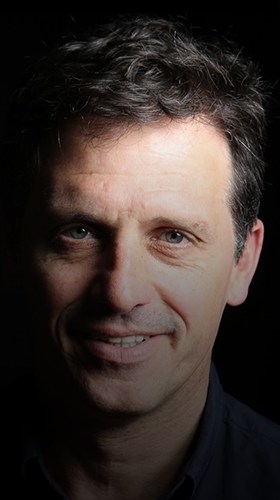
Mariano Sigman exemplifies the exception: with more than 150 published papers on decision-making, learning, and consciousness, his body of work is formidable, but what makes him relevant to C-suite audiences is his applied engagement with organisations using that science to change how their people think and decide. That combination — research depth plus commercial translation — is rare, and it is the first filter.
Can they translate brain science without the jargon?
The WEF Global Future Council on Neurotechnologies identified neuro-enhancement, brain-computer interfaces, and cognitive data privacy as strategic risks that boards will need to govern by 2027. A speaker covering this territory who cannot make those concepts legible to a non-technical board is presenting a missed catalyst moment, not a strategic advantage.
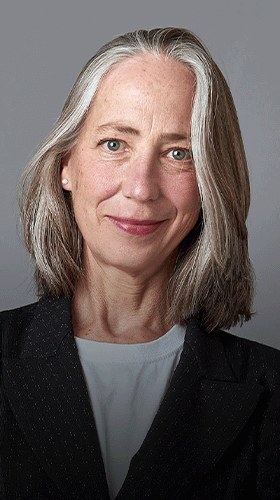
Helena Boschi works precisely in this translation space — applied neuroscience at work is her exact specialism, and her practice is built on converting brain science into immediately actionable workplace frameworks that leadership teams can absorb and deploy without a neuroscience background.
Have they spoken to sceptical business audiences?
Clinical leaders, engineers, risk officers, and CFOs all push back differently — but they share a high tolerance for specificity and a low tolerance for claims that outrun the evidence. A speaker who has held credibility in those rooms will cite primary literature, distinguish correlation from causation, and answer hard methodological questions without retreating to generality. Verify this with a reference call or event recordings before shortlisting.
The difference between a speaker who impresses and a speaker who changes behaviour is a question of wisdom architecture — it is the craft of building a session that moves a room from intellectual engagement to applied commitment. That is what Speaker Agency curates.
When Should You Book a Neuroscience Speaker
Seven event contexts where a neuroscience booking adds a precision that generic motivational content cannot.
Leadership development programmes — Senior leadership cohorts exploring cognitive bias, decision-making quality, and emotional regulation under pressure; pairs naturally with psychology speakers covering the behavioural science side of the same leadership brief.
Employee wellbeing and mental health awareness events — All-hands or departmental sessions addressing burnout, cognitive load, and stress response in hybrid or high-pressure environments; look also at workplace wellbeing speakers where the brief centres on culture rather than neurobiology.
HR and L&D conferences — People professionals seeking evidence-based frameworks for behaviour change, habit formation, and learning retention that they can carry back and embed in programme design.
Technology and innovation summits — CTO and CDO audiences exploring brain-computer interfaces, neuro-AI convergence, and what brain science says about human cognitive advantage in an AI-augmented workplace.
Financial services risk and strategy days — Risk officers and investment teams examining decision-making under uncertainty, cognitive bias in financial judgement, and the neuroscience underpinning behavioural economics.
Sales kickoffs and performance culture events — Revenue teams learning the neuroscience of motivation, persuasion, habit formation, and peak performance as a science-backed foundation for performance culture.
Healthcare and NHS leadership conferences — Clinical leaders addressing burnout prevention, decision fatigue in clinical settings, and neuro-based wellbeing models that meet the analytical rigour their audiences require.
These contexts overlap in practice — a technology summit may carry a strong burnout thread; an NHS leadership day may focus heavily on decision science. The pattern that matters is that each of these settings has an audience that will respond to evidence, not anecdote.
Topics Our Neuroscience Speakers Cover Most Often
Because neuroscience spans a wider set of sub-disciplines than most corporate speaking categories, matching the topic cluster to the audience brief is essential before shortlisting begins.
Decision-making and cognitive bias — How the brain constructs choices, where bias enters at each stage, and how leaders can improve judgement quality under time pressure and uncertainty.
Burnout, stress response, and cognitive resilience — The neurological mechanisms behind burnout; evidence-based prevention frameworks designed for high-performance teams that cannot simply slow down.
Habit formation and behaviour change — Brain-based models for embedding new behaviours at individual and organisational level; the science behind why most change programmes fail and what the evidence says about what works.
Neurotechnology, brain-computer interfaces, and cognitive enhancement — Frontier science for innovation audiences; what is operationally real now and what the 2027–2030 development window looks like for boards setting technology governance policy.
Learning science, memory, and knowledge retention — How the brain encodes, stores, and retrieves information, and the practical implications for L&D programme design, onboarding, and continuous professional development.
Leadership neuroscience — The neural correlates of trust, empathy, authority, and high-stakes decision-making; the science behind what makes a leader credible, not just compelling.
Sleep, recovery, and peak cognitive performance — The performance science behind rest; the evidence case for boards and people teams investing in sustainable high performance rather than managing its collapse.
For event teams building multi-session programmes, this breadth is an asset — a neuroscience thread can run across a conference day and hold thematic coherence because the sub-disciplines connect through a single underlying question: what does the brain actually need to perform?
How to Choose the Right Neuroscience Speaker
The selection criteria for neuroscience speakers are more granular than for most corporate speaking categories — the sub-discipline gap is wide enough that a poor match wastes the room even if the speaker is exceptional within their own specialism.
Audience type and angle — Match the neuroscience sub-discipline to what the audience actually needs: decision-making and cognitive bias for C-suite and strategy teams; burnout-resilience frameworks for HR and people leaders; neurotechnology and neuro-AI for technology audiences; clinical burnout and decision fatigue for healthcare. Applying the wrong sub-discipline to a senior audience damages credibility before the session finds its footing.
Practitioner versus academic versus applied translator — Decide whether the brief calls for research authority, direct corporate application experience, or a speaker who bridges both. Each serves a different event purpose; conflating them produces a mismatch that no amount of speaker talent resolves.
Format match — A 45-minute keynote demands a single, clean insight arc. A half-day workshop earns its length through active application: cognitive tools, team exercises, facilitated reflection. Neuroscience content is dense; longer formats benefit significantly from structured interaction rather than extended lecture.
Sceptic readiness — Analytically minded audiences — risk officers, engineers, clinicians, CFOs — will challenge methodology. Verify that the speaker cites primary literature, distinguishes correlation from causation, and has a track record with rooms that push back. A speaker who performs well for general audiences may lose credibility with a technically literate cohort.
Audience seniority — Board-level audiences need strategic framing and systemic implications; frontline teams need practical tools and immediate application. The same neuroscience content rarely serves both without substantial adaptation — confirm at briefing stage which register the session must hit.
Time horizon — Specify whether the event needs immediate application (stress management tools, habit-change techniques) or longer-term strategic framing (neurotechnology governance, the future of human cognitive capital). Understanding what a neuroscience keynote speaker costs in the UK also helps set realistic expectations before the briefing call.
How Speaker Agency Helps You Find the Right Match
Neuroscience is one of the few speaker categories where the brief requires genuine diagnostic work before shortlisting begins.
Map the wisdom gap. We identify whether an organisation needs decision-making neuroscience, burnout-resilience frameworks, neurotechnology foresight, or applied workplace brain science — because on this topic more than most, the wrong sub-discipline fails the room regardless of the speaker's credentials. That diagnosis shapes everything that follows.
Curate the elite voices. From a 300+ UK roster and 1,190+ global network spanning peer-reviewed research authorities to applied corporate specialists, we deliver a calibrated shortlist within 24 hours — matched to the specific neuroscience angle, audience seniority, and format the brief demands.
Architect the catalyst moment. Every neuroscience engagement is built around a transformation blueprint — format, session flow, pre-event audience diagnosis, and content sequencing — engineered so that brain science translates into behavioural shifts that hold beyond the room, not awareness that fades by Friday.
Sustain the momentum. Post-event, we support integration through follow-up workshop options with applied neuroscience specialists, post-session toolkits designed for L&D programme sequencing, and structured debrief calls that help event teams measure what has changed.
Speaker Agency operates as a Wisdom Catalyst — a knowledge architecture practice, not a speaker directory. Our neuroscience capability spans the UK, Europe, and a global network that reaches the researchers, clinical practitioners, and corporate translators whose work sits at the frontier of this field. When you brief us, you are not searching a database — you are engaging an advisory team that has already done the curation work.






 After Dinner Speakers

 Discover Similar Topics