Transformation happens at the intersection of knowledge and action. The demand for neurodiversity speakers in the UK has moved well beyond the awareness session — in 2024, Acas, the CIPD, and the EHRC all updated their neurodiversity-at-work guidance in the same calendar period, shifting neurodiversity from a wellbeing aspiration onto HR leadership agendas as an operational and legal priority.
An estimated 1 in 5 people in the UK workforce is neurodivergent; fewer organisations have a formal neurodiversity policy than the proportion of neurodivergent employees they already employ. That gap is the brief. This page serves HR directors acting on Equality Act obligations, C-suite leaders treating cognitive diversity as a commercial asset, and line managers facing a daily capability gap they have not been equipped to close.
Speaker Agency doesn't slot a speaker into a session — we architect the wisdom transfer that converts a compliance obligation or an inclusion ambition into a measurable shift in how an organisation thinks, manages, and performs.
Why Hire a Neurodiversity Speaker for Your Event
Neurodiversity sits at the intersection of legal obligation and commercial opportunity — and the most effective speakers hold both arguments in the same session.
The Inclusion Imperative puts hard requirements on the table. According to CIPD's Neurodiversity at Work guidance, 1 in 5 people in the UK workforce is neurodivergent — yet fewer than 1 in 5 organisations have a formal neurodiversity policy. That arithmetic is not an aspiration gap; it is a compliance gap with real legal exposure under the Equality Act 2010.
HR directors who have absorbed this through a policy update now need an accelerant — a speaker who can make the implications land for an entire leadership population in a single session. Neurodiversity belongs within the broader diversity and inclusion speakers agenda, but carries specific legal teeth that demand targeted treatment.
The Performance and Innovation Dividend reframes the conversation for C-suite audiences who respond to competitive logic rather than moral argument. ADHD hyperfocus, autistic systems-thinking, and dyslexic pattern recognition are not compensatory traits — they are cognitive assets. Technology, financial services, and engineering sectors are already treating neurodivergent hiring pipelines as a strategic differentiator. The right speaker makes that case with sector-specific evidence, not inclusion platitudes.
The Management Capability Gap is where organisational intent collapses into daily practice. Line managers consistently report low confidence in supporting neurodivergent team members — and conventional L&D rarely addresses this with the depth or speed the situation demands. A keynote or workshop speaker delivers behaviour-changing frameworks in a single session that months of policy rollout cannot replicate. The choice of speaker angle — compliance, performance, or management practice — determines whether the event produces a shifted mindset or a changed Monday morning.
What Sets a Great Neurodiversity Speaker Apart
Do they bring lived experience, practitioner expertise — or both?
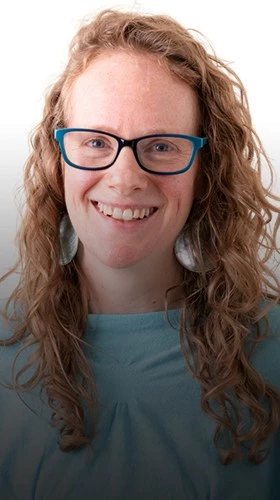
The strongest neurodiversity speakers don't choose between the two. Leanne Maskell — ADHD coach, author, and presenter to the WHO on global ADHD support access — demonstrates what verified external impact looks like: her credibility rests not on lived experience alone but on a professional track record with internationally recognised institutions. That combination closes the scepticism gap before the Q&A opens.
Can they translate neuroscience into manager behaviour change?
Awareness of neurodiversity is not the same as knowing what to do on Monday morning. Probe whether a speaker leaves audiences with a concrete framework — structured feedback approaches, communication adaptations, disclosure protocols — rather than a shifted mindset that evaporates by Thursday.
Can they hold a room of sceptics?
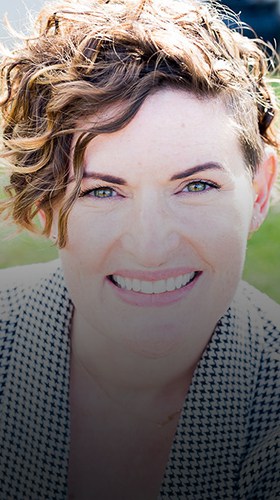
Senior leadership audiences enter many neurodiversity sessions with commercial scepticism — and they are right to. Rachel Morgan-Trimmer's TEDxWarrington talk "Inclusion is selfish" reframes inclusion as strategic self-interest — a provocation designed to meet commercially-minded audiences on their own terms rather than ask them to suspend them.
Have they influenced practice beyond the conference circuit?
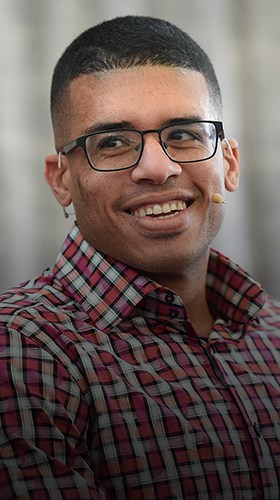
Policy contribution, advisory board membership, and published research signal that a speaker's thinking carries weight in the field, not only on stage. Tumi Sotire's credentials — A2i Dyslexia Best Dyspraxia Advocate 2021, Dyspraxic Foundation Mary Colley Award, Board Advisory for the Centre for Neurodiversity at Work at Birkbeck, Neurodiversity in Business Co-Production Board Member — represent verifiable sector influence that a keynote listing cannot fabricate.
These criteria are the starting architecture, not a final checklist. Neurodiversity briefs frequently intersect with mental health: event planners building combined programmes will find relevant cross-roster depth among our mental health speakers. Speaker Agency's advisory function is to match the right wisdom profile to the specific audience gap — wisdom architecture, not speaker selection.
Topics Our Neurodiversity Speakers Cover Most Often
The Speaker Agency roster covers neurodiversity from multiple angles — condition-specific sessions, leadership and management frameworks, and intersectional perspectives that a single-lens approach cannot reach.
ADHD in the workplace — Hyperfocus as a deployable asset, disclosure decisions and their career implications, management adjustments, and strategies for ADHD professionals operating in high-demand environments.
Autism and inclusion — Moving beyond awareness into practice: autistic communication styles, sensory considerations in physical and virtual workplaces, and building psychologically safe team environments where autistic colleagues are set up to perform.
Dyslexia and dyspraxia — Cognitive strengths in pattern recognition and spatial thinking; practical adjustments for roles where written communication is the default currency, not the only measure of competence.
Intersectionality and neurodiversity — Where neurodivergent identity intersects with race, gender, and class — Tumi Sotire's territory as a Black Dyspraxic British-born Nigerian speaker. A single-lens approach to inclusion misses the compounded experience of many neurodivergent employees; this sub-topic addresses that gap directly.
Neurodivergent leadership and entrepreneurship — How neurodivergent founders and executives channel divergent thinking as a strategic advantage, reframing difference as leadership currency in high-stakes roles.
Neuro-inclusive management practices — Practical toolkits for line managers: structured feedback approaches, flexible working patterns, communication adaptations — the behaviour-change layer that makes organisational commitment real at team level.
Many speakers on the roster work across several of these sub-topics. Speaker Agency's advisory process clarifies which profile best serves a specific brief before a shortlist is produced.
When Should You Book a Neurodiversity Speaker
The event type matters less than the objective. These are the briefs neurodiversity speakers serve most effectively.
DEI and Inclusion Days — Annual company-wide events where People teams need a keynote that moves audiences from passive awareness to practical behavioural change — not another slide deck on why inclusion matters.
HR Leadership Summits — Internal or sector-wide events for HR directors and CHROs navigating Equality Act compliance, tribunal risk, and neurodivergent talent retention. Acas guidance on neurodiversity in the workplace confirms that many employers remain unaware that ADHD and dyslexia can qualify as disabilities under the Act — a gap that creates direct tribunal exposure and makes this one of the higher-stakes briefing environments on the calendar.
Manager Development Programmes — Line manager cohort training days where the objective is concrete and immediate: how to support a neurodivergent team member in daily practice, not in principle.
All-Staff Conferences — Company-wide events where neurodiversity forms a thread within a broader culture, transformation, or belonging narrative and needs a speaker who can hold a mixed-seniority room.
Recruitment and Talent Strategy Events — Investor days, talent board sessions, or employer-brand events where neurodivergent hiring pipelines are positioned as a competitive differentiator, not a compliance afterthought.
Technology and Engineering Team Offsites — Sectors where neurodivergent cognitive profiles are disproportionately represented; a speaker helps teams understand themselves, each other, and the management structures that either unlock or suppress their performance.
Education Sector and Schools Conferences — Governors, teachers, and school leadership events where ADHD, dyslexia, and autism in educational settings are operational priorities with direct safeguarding and attainment implications.
These use cases combine in practice — a technology firm running a talent strategy day may need a speaker who addresses both the performance dividend and the management capability gap in the same session.
How to Choose the Right Neurodiversity Speaker
The brief is set. The question now is which speaker profile serves it.
Audience type and seniority — A C-suite audience needs a speaker who reframes neurodiversity as commercial strategy; a line manager cohort needs one who delivers a behaviour-change toolkit. These are distinct briefs, and a speaker strong in one mode is not automatically effective in the other. Fix the audience profile before shortlisting.
Lived experience versus practitioner expertise — or both — Some briefs need the authority of a neurodivergent speaker sharing first-hand experience; others need a consultant-practitioner with a verified track record of changing how organisations operate. Many of the strongest bookings combine both in a single speaker — confirm which the audience will respond to before the search begins.
Condition-specific versus broad neurodiversity focus — A tech sector event focused on ADHD specifically may not be well served by a generalist neurodiversity speaker. Clarify whether the brief is condition-specific or portfolio-wide before shortlisting; the speaker pool for each is different.
Tone calibration: provocative versus instructional — Some neurodiversity speakers lead by reframing assumptions and disrupting defaults; others lead with structured tools and process frameworks. Match the speaker's natural register to the audience's readiness level and the event's stated objective — a provocative session delivered to a management cohort expecting a toolkit produces friction, not change.
Format match: keynote versus workshop — A 45–60 minute keynote builds awareness and shifts perspective across a large audience; a 2–4 hour workshop changes behaviour through structured interaction. These are not interchangeable formats, and not all speakers operate effectively in both. Confirm format before shortlisting. For a full picture of what engagement investment looks like, see our guide on how much a keynote speaker costs in the UK.
Sceptic readiness — In senior leadership and board-level settings, neurodiversity still encounters commercial resistance. Confirm the speaker has experience holding and converting a sceptical room — not only presenting to audiences already committed to the agenda.
How Speaker Agency Helps You Find the Right Match
The advisory process starts before the shortlist does.
Map the wisdom gap. The brief for a neurodiversity speaker can be compliance-led (Equality Act obligations, HR policy), culture-led (belonging, psychological safety), or performance-led (unlocking neurodivergent cognitive assets in high-stakes teams) — and each demands a different speaker profile. Speaker Agency's first step is to identify which gap the organisation is actually trying to close, because the wrong diagnosis produces the wrong speaker.
Curate the elite voices. Drawing from a 300+ UK roster and a 1,190+ global network, Speaker Agency produces a targeted shortlist within 24 hours — matched not only by topic but by audience seniority, tone calibration, and whether the brief calls for lived experience, practitioner expertise, or both.
Architect the catalyst moment. Speaker Agency works with the selected speaker and the organising team to design a session structure — format, duration, audience framing, follow-on materials — that converts the catalyst moment into a transformation blueprint the organisation can act on after the room empties.
Sustain the momentum. A single keynote shifts mindset; sustained change requires a follow-on architecture. Speaker Agency advises on post-event resources, supplementary workshops, and longer-term speaker partnerships that keep the neurodiversity agenda moving from awareness into embedded practice.
Speaker Agency operates as a Wisdom Catalyst — a Knowledge Architect and Strategic Advisory Partner, not a speaker directory. The team brings the same advisory rigour to a 200-person manager development day as to a 2,000-person all-company conference. With reach across the UK, Europe, and Türkiye, every shortlist is built against the specific wisdom gap the event needs to close — not the speakers who happen to be available.






 After Dinner Speakers

 Discover Similar Topics