Your next breakthrough is one wisdom transfer away. The conversation about Social Media Speakers UK has moved sharply up the corporate agenda — not because platforms changed, but because the stakes did. Ofcom reports that 88% of UK adults are on social media weekly, the Online Safety Act is in active enforcement, and the creator economy is now a board-level revenue question.
Social media has migrated from the marketing department to the C-suite, carrying legal exposure, reputational risk, and commercial opportunity in equal measure. Event planners who book a social media commentator get a presentation; those who commission the right wisdom transfer get an organisation that thinks differently about its platform posture, its regulatory obligations, and its next competitive move. Speaker Agency architects that transfer.
Why Hire a Social Media Speaker for Your Event
Social media is no longer a channel decision — it is the primary surface on which UK organisational reputation, revenue, and regulatory standing are made or lost.
Platform Reach as Organisational Infrastructure starts with a fact that should make every leadership team sit up: according to Ofcom's Online Nation 2025 report, 88% of UK adults used a social media or messaging service in the past week, with short-form video the fastest-growing content format by time spent among adults under 45. That penetration means every customer-facing, employer-facing, and investor-facing decision now carries a social media dimension. The premise here is scale, not novelty — organisations that treat social media as optional are making a risk management error.
Regulatory Pressure & Reputational Risk has shifted this from a marketing topic to a governance one. The Online Safety Act 2023 entered active enforcement in 2025–26, creating new employer liability, content governance obligations, and crisis response requirements. Legal, HR, and compliance functions are now scheduling social media speakers specifically for this angle — not to learn about hashtags, but to understand what duty of care looks like when an employee's post becomes a headline.
Social Commerce & the Creator Economy completes the picture. TikTok Shop, Instagram Checkout, employee advocacy programmes, and brand-creator partnerships have moved from campaign tactics to strategic infrastructure choices. For retail, FMCG, and professional services, social media is a revenue channel question, not an awareness one — and that requires a speaker who has made those decisions under commercial pressure, not one who has observed them.
The same breadth that makes social media complex is what makes a practitioner speaker uniquely valuable: no internal team holds expertise across platform infrastructure, regulatory compliance, and commercial opportunity simultaneously.
What Sets a Great Social Media Speaker Apart
Social media produces more commentary than almost any other professional field, because every executive has an account and an opinion. The test of a great social media speaker is not platform follower count — it is platform accountability: have they built something, operated something, or governed something at scale, and can they carry that experience into a room of sceptics?
Have they operated inside the platforms?
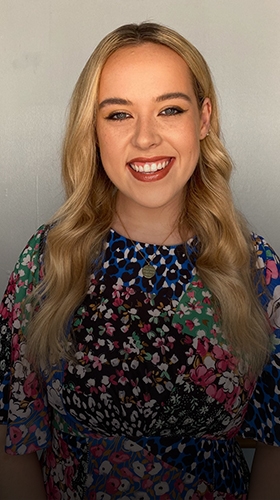
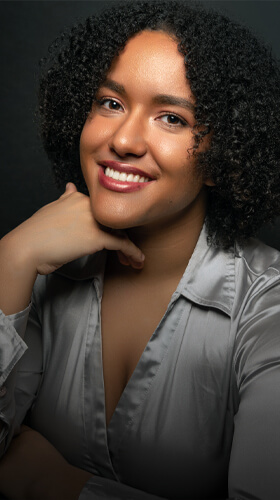
Clodagh Griffin — known in the industry as the "TikTok Professor" — worked as a journalist and presenter at News Movement and Yahoo's TikTok channel, placing her inside the platform's editorial and algorithmic mechanics rather than adjacent to them. That is the difference between an opinion and an operating perspective. She can answer questions from the room that a strategist simply cannot.
Can they translate between tactics and strategy?
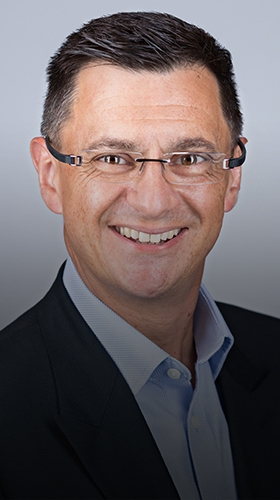
Allister Frost served as Microsoft's first-ever Head of Digital Marketing Strategy — a role that required bridging platform mechanics with C-suite decision-making across one of the world's largest enterprise environments. In a field dominated by creator-background speakers, that enterprise-to-platform fluency is rare, and it is exactly what a room of senior leaders needs.
Do they understand the regulatory context?
In 2026, this is no longer a niche criterion. Speakers who can address the Online Safety Act, FCA social media compliance requirements, and online harm frameworks alongside platform optimisation represent a separate category of value — particularly for financial services, professional services, and public sector events where compliance is not a footnote but a governing constraint.
Selecting a social media speaker is not a speaker selection exercise — it is a wisdom architecture decision about which practitioner lens will produce the most durable shift in how your audience thinks and acts on their platform responsibilities and opportunities.
The State of the Creator Economy 2025 values the global creator economy at over $250bn, with the UK among the top-three contributor markets and the proportion of brands allocating 20%+ of marketing budget to creator partnerships having doubled since 2022. That commercial scale demands a speaker who has navigated it, not one who reports on it.
Topics Our Social Media Speakers Cover Most Often
The breadth of this list is itself an argument for curation over keyword search — social media as a topic cluster spans what would, in any other field, be treated as two or three distinct disciplines.
Platform strategy & algorithm fluency — Reach, organic versus paid trade-offs, and format decisions specific to 2026 platform conditions.
Social commerce — TikTok Shop, Instagram Checkout, and social media as a direct revenue channel for retail, FMCG, and consumer brands.
Creator economy & influencer strategy — Brand-creator partnerships, owned-media versus earned-media allocation, and creator programme governance.
Employee advocacy & personal branding — LinkedIn programme design, internal social media policy, and turning employees into credible brand voices.
Online safety, reputation risk & the Online Safety Act — Regulatory compliance, employer liability, crisis response, and the governance obligations now facing organisations of all sizes.
Social media for B2B & LinkedIn — Thought leadership strategy, pipeline generation, and platform-led BD for professional services and financial services — a natural complement to what our marketing speakers cover for CMO-led programmes.
Short-form video & content strategy — Reels, Shorts, and TikTok editorial planning: format mechanics and the organisational capacity questions behind sustainable content production.
A speaker who excels at one of these angles may have little to say about another. That is why the first question in any briefing should be which of these the event actually needs.
When Should You Book a Social Media Speaker
The right trigger for booking a social media speaker is less about calendar occasion and more about the moment an organisation recognises that its relationship with social media has outgrown what its current knowledge can manage.
Marketing & Brand Strategy Days — CMOs and marketing leads resetting platform priorities, paid/organic mix, and content calendars for 2026 need speakers who are current on algorithm conditions, not presenting last year's playbook.
Sales Kickoffs — Social selling, LinkedIn prospecting, and personal brand as a commercial pipeline tool; practitioners with proven revenue results land hardest in rooms where the audience is measured on closed deals.
HR & Employee Communications Conferences — Employee advocacy programmes, social media conduct policies, and Online Safety Act employer liability; legal and HR audiences need regulatory context alongside platform literacy, in that order.
Board & C-Suite Briefings — Reputational risk from viral complaints, executive account exposure, and platform misinformation demands speakers who frame social dynamics in risk-management language. Dave Carroll's United Breaks Guitars story — 150 million views from a single customer service failure — remains the sharpest boardroom illustration of what unmanaged social exposure costs. This angle also bridges naturally to our customer experience speakers, where the reputational and commercial overlap is significant.
Financial Services & Professional Services Sector Events — FCA-adjacent compliance, LinkedIn thought leadership for BD, and digital client engagement in regulated environments; speakers must understand compliance constraints without treating them as a ceiling.
Education & Public Sector Conferences — Online harm, algorithmic literacy, children's social media behaviour, and the Online Safety Act obligations facing institutions from universities to local authorities.
Retail, FMCG & Fashion Summits — Social commerce tactics, creator economy strategy, and short-form video as a revenue channel; these audiences want applied expertise from speakers with brand-side or platform-side experience, not agency-side observation.
How to Choose the Right Social Media Speaker
The most common briefing error in social media speaker selection is treating the category as homogeneous. A TikTok algorithm specialist and an Online Safety Act compliance expert are not interchangeable — even when both describe themselves as social media speakers. Use these criteria before shortlisting.
Audience sophistication level — A room of CMOs requires strategic depth and commercial accountability that a room of marketing coordinators does not; the speaker's usual audience profile is as relevant as their subject matter.
Platform focus: B2B versus B2C — LinkedIn-first speakers and TikTok-first speakers serve fundamentally different event programmes; establish your audience's primary platform environment before you look at names.
Regulatory sensitivity — Events in financial services, healthcare, or education require speakers who can address compliance constraints and commercial opportunity in the same breath, without skirting either.
Keynote versus workshop format — A 45-minute keynote that reframes an audience's thinking and a half-day workshop on platform content creation require different specialists; confirm format specialism before booking, not after.
First-hand case studies versus commentary — Speakers who have built, managed, or governed social media at organisational scale carry a different quality of insight to those who analyse it from outside. The distinction is visible in the room within ten minutes.
Sceptic readiness — In board-level and financial services settings, the audience will challenge social media ROI claims directly; confirm the speaker can hold that conversation with precision before a fee is agreed.
For a transparent starting point on investment, see what a social media speaker costs in the UK — fees begin from £5,000 for corporate engagements and range to £50,000 for the most senior practitioners.
How Speaker Agency Helps You Find the Right Match
Most social media speaker searches start with a name search. Ours starts differently.
Map the wisdom gap. Social media events fail when the brief conflates tactics with strategy, or platform mechanics with regulatory risk. We open every engagement by mapping exactly where your audience's knowledge stops and where the organisational cost of that gap begins — platform illiteracy, compliance exposure, or missed commercial opportunity.
Curate the elite voices. From our 300+ UK roster and 1,190+ global network, we shortlist speakers within 24 hours — distinguishing between platform-native practitioners, enterprise strategists, regulatory specialists, and creator economy authorities, so your shortlist reflects the brief rather than the broadest available name recognition.
Architect the catalyst moment. We design the transformation blueprint for the session — format, sequencing, audience interaction, and follow-on materials — so your event moves beyond a presentation and becomes the moment your organisation's relationship with social media shifts.
Sustain the momentum. A single social media keynote rarely changes organisational behaviour on its own. We advise on post-event resources, workshop follow-on, and internal advocacy tools that keep the wisdom transfer active after the room empties.
Speaker Agency operates as a Wisdom Catalyst — not a booking intermediary. The difference is that we come to your brief with a view on what your audience actually needs, not just a roster of names who have spoken on the topic before.
Whether your event is in London, across Europe, or convening an international audience, our reach across the UK and the wider European network means the right voice for your programme exists within our shortlist. Social media speaker fees start from £5,000 for corporate engagements. Share your brief, your budget, and your event date — and we will return a considered shortlist, not a catalogue.






 After Dinner Speakers

 Discover Similar Topics