Transformation happens at the intersection of knowledge and action. The brief for Design Thinking Speakers UK has shifted — what corporate audiences are commissioning in 2026 is not a session on sticky notes and empathy maps, but a fundamental recalibration of how their organisation identifies and frames problems before committing resources to solutions.
The Design Economy 2024 places design-intensive businesses at £97.4bn in annual gross value added — making design thinking a board-level ROI discipline, not a workshop methodology. From FTSE 100 product teams using design sprints to de-risk AI deployment, to NHS trusts redesigning patient pathways, UK organisations are booking design thinking speakers to solve the right problems — not just faster, but fundamentally differently.
Speaker Agency doesn't source speakers who explain design thinking — we architect the wisdom transfer that embeds it.
Why Hire a Design Thinking Speaker for Your Event
Design thinking has moved from innovation conference staple to measurable commercial strategy — and the data makes that case without ambiguity. According to the Design Economy 2024, businesses that invest in design see £4 returned for every £1 spent. The McKinsey Design Index reinforces this globally: top-quartile design-led companies outperformed peers by 32% in revenue growth and 56% in total shareholder return over five years.
A design thinking speaker doesn't add creative energy to your event — they make the commercial argument, backed by evidence, for restructuring how your organisation pursues opportunity.
Human-centred problem framing asks the harder question before the easier one: not "how do we build this?" but "are we solving the right problem at all?" Most UK leadership teams are data-rich and instinctively solution-first — they resource answers before interrogating the question. A design thinking speaker recalibrates that instinct in a single session, giving teams a shared vocabulary and method for problem definition that carries into every subsequent decision.
AI and design thinking convergence is the most commercially urgent application in 2026. Empathy mapping and rapid prototyping, applied before AI outputs reach customers, provide the human-validation layer that pure technical deployment misses. CDOs, innovation directors, and digital transformation leads are booking speakers on this convergence specifically — not because they lack AI capability, but because they need a structured method for stress-testing it against real human need before scale.
Culture of experimentation is where design thinking operates as an organisational operating system rather than a single-use tool. The shift from failure-avoidance to iterative testing is particularly resonant for CHROs, L&D directors, and large public sector bodies mid-transformation. When a speaker can demonstrate that a prototype failure is a design input rather than a performance risk, they change the psychological contract teams hold with innovation itself.
The choice of angle determines what the audience leaves with — a methodology briefing, or a reframe that changes which problems the organisation pursues next.
What Sets a Great Design Thinking Speaker Apart
Design thinking sits adjacent to — but is structurally distinct from — creativity speakers, whose value comes primarily from divergent thinking and imaginative provocation. Design thinking's commercial case rests on a disciplined, evidence-based methodology: empathy, definition, ideation, prototyping, testing. The speakers who deliver that methodology credibly have done it inside real organisations, under real constraints, with real accountability for the outcome.
Have they applied it inside a real organisation?
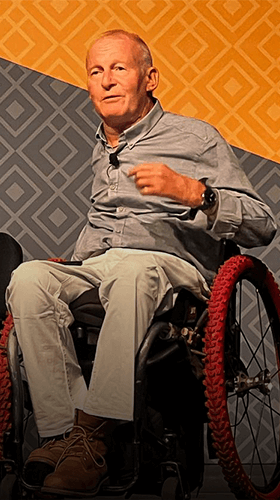
The difference between a practitioner and a commentator shows up within the first ten minutes of a talk. David Constantine MBE, founder of Motivation Charitable Trust and Freedom Through Design, has spent decades applying human-centred design methodology at the scale of international health infrastructure — his sessions carry the weight of someone who has built prosthetics for 400,000 people across 40 countries, not someone who has studied the process. That kind of practitioner depth is the standard to apply.
Can they bridge methodology and measurable outcome?
A design thinking speaker who cannot connect empathy mapping to revenue impact, patient throughput, or product failure rate reduction will lose a boardroom before the first slide. The £4:£1 return figure from the Design Council is the outcome standard — your speaker should be able to speak to it credibly, from their own experience, not as a citation.
Do they hold the room when sceptics push back?
Strategy directors, CFOs, and engineering leads push back on process-led methodologies with precision. The speaker who thrives in that moment has a specific answer — not a reframe, not a deflection, but a case study where design thinking produced a number the sceptic would recognise as meaningful.
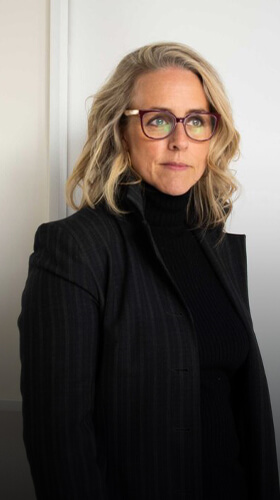
Are they current on AI-era applications of design thinking? Cassie Kozyrkov, former Chief Decision Scientist at Google, personally trained over 22,000 employees in Decision Intelligence and has applied design-adjacent human-validation frameworks to AI systems at a scale no academic commentator can match. For briefs centred on AI product governance and human-centred validation, this is the practitioner benchmark.
Selecting well here is an exercise in wisdom architecture, not speaker selection — the right practitioner doesn't just deliver a session, they shift how the audience thinks about the discipline for the years that follow.
Topics Our Design Thinking Speakers Cover Most Often
Design thinking spans a wide methodological range. The talk themes below represent the most frequently requested angles on the UK corporate circuit — each with a distinct application that experienced event planners use to sharpen their brief before shortlisting.
Human-centred product design — building what customers actually need, not what the brief assumed
Design sprints and rapid prototyping — compressing validation cycles from months to days
AI and design thinking — applying empathy mapping and prototype testing before AI products go to market
Empathy mapping for customer experience — reframing CX strategy from metric-watching to genuine understanding
Inclusive design — embedding accessibility and diversity into the design process from day one
Building an organisational culture of experimentation — shifting from failure-avoidance to iterative testing
Design thinking for leadership teams — using design methods to reframe strategic decisions and team structures
Design thinking in public services — applying human-centred methodology to NHS and government service redesign
The range here matters: a speaker strong on AI product validation may not be the right choice for an NHS pathway redesign programme. The brief precision that separates a transformative engagement from a generic keynote starts here.
When Should You Book a Design Thinking Speaker
The use cases below represent the moments where a design thinking speaker delivers the sharpest return — matched to the specific intellectual catalyst each context requires.
Annual strategy kickoffs — Leadership teams resetting priorities benefit from a speaker who reframes how problems are defined before solutions are resourced; design thinking provides exactly that upstream discipline.
Product and innovation summits — Cross-functional teams respond to a speaker who models the sprint-and-prototype mindset live, making the methodology tangible rather than conceptual.
Digital transformation conferences — CDO and CTO audiences navigating AI deployment need the human-validation layer design thinking provides before they commit to scale.
Customer experience forums — CX directors and heads of customer success find that empathy-mapping and journey-redesign methodologies translate directly into programme architecture, not just inspiration.
L&D and people-team away-days — CHROs embedding a culture of experimentation need a speaker who reframes failure as a design input — not a performance risk to be managed.
Financial services innovation days — Banks and insurers under regulatory pressure to innovate responsibly benefit from design thinking's structured, auditable approach to new product validation.
Public sector and NHS transformation programmes — Organisations redesigning citizen or patient services increasingly operate within frameworks where human-centred methodology is mandated; the right speaker accelerates cultural adoption.
Start-up and scale-up accelerator events — Founders using design sprints as their primary operating methodology benefit from expert facilitation; where the brief leans toward breakthrough innovation over iterative process design, disruptive innovation speakers may be the sharper adjacent fit.
These contexts are rarely mutually exclusive — an NHS digital transformation event, for instance, sits at the intersection of three of them simultaneously.
How to Choose the Right Design Thinking Speaker
The brief clarity you bring to shortlisting directly determines whether the session produces a methodology shift or a well-received keynote that fades within a fortnight.
Sector fit — Design thinking looks materially different in financial services, the NHS, and a SaaS scale-up; confirm the speaker has delivered in your specific context, not an adjacent one. Generic case studies travel poorly across audiences with fundamentally different constraints.
Practitioner versus commentator — Prefer speakers who have run actual design sprints inside organisations over those who teach the methodology academically. The practitioner can answer questions the commentator has to defer; that difference is visible to your audience.
Format match — A 45-minute keynote and a two-to-four-hour facilitated workshop are not interchangeable. Speakers who excel at one rarely perform to the same standard in the other. Design thinking has a higher proportion of workshop-format bookings than most speaker categories — confirm the speaker's track record in the format your event requires before shortlisting.
Audience seniority — A C-suite audience needs the strategic frame and the business case; a product team wants hands-on method exposure and a prototype they can take back on Monday. Clarify seniority level before the shortlist is built.
Time horizon — A single catalyst session and a multi-stage transformation programme require different roster thinking. Speakers who return across stages need an ability to build on prior engagement, not just replicate an opening keynote.
Budget range — Design thinking speakers on the UK corporate circuit typically fall between £5,000 and £25,000; global practitioners with board-level credentials extend beyond that. For a full picture of what investment levels correspond to which speaker profiles, see our guide to what a keynote speaker costs in the UK.
How Speaker Agency Helps You Find the Right Match
Getting design thinking right inside an organisation is not primarily a speaker-sourcing challenge — it is a knowledge architecture challenge. These are the four steps we take to close it.
Map the wisdom gap. Design thinking failures inside organisations rarely stem from lack of awareness of the methodology — they stem from unclear problem framing, insufficient empathy infrastructure, or a culture that punishes prototype failure. We diagnose which of these blockers your audience is carrying before recommending a speaker.
Curate the elite voices. From a 300+ UK roster and a 1,190+ global network, we identify speakers whose design thinking credentials come from applying the methodology at organisational scale — not from teaching it. Your shortlist arrives within 24 hours.
Architect the catalyst moment. We work with you and the selected speaker to build a transformation blueprint — mapping the session format, audience framing, and post-talk activation so the methodology transfer has traction beyond the room.
Sustain the momentum. The most effective design thinking engagements don't end at the closing slide. We advise on follow-on formats — facilitated workshops, sprint coaching sessions, or a return keynote at the next stage of your transformation programme — to keep the iteration cycle alive.
Speaker Agency operates as a Wisdom Catalyst and Knowledge Architect — the strategic partner in your design thinking engagement, not the procurement layer beneath it. We work with event planners, L&D leads, and innovation directors across the UK and Europe to ensure the knowledge capital transferred in a single session becomes the foundation of lasting organisational change.
The design thinking speakers on our roster were selected because they can do what the brief demands: shift how a leadership team frames problems, and leave an audience with a method they can use before the week is out.
Ready to Book a Design Thinking Speaker?
The right design thinking speaker doesn't add a session to your agenda — they re-route how your leadership team defines its problems, and that shift begins with a single conversation. Tell us your event brief, your audience, and the outcome you need; we will have a shortlist with you within 24 hours. Fees for corporate engagements start at £5,000, with most bookings falling between £5,000 and £25,000.
📞 +44 (0) 20 3393 1061
✉ info@speakeragency.co.uk
🌐 speakeragency.co.uk/contact






 After Dinner Speakers

 Discover Similar Topics