Your next breakthrough is one wisdom transfer away. The demand for Future Trends Speakers UK has surged at precisely the moment UK boards can least afford to get this wrong — post-pandemic supply chain fragmentation, the AI productivity shock, and geopolitical trade realignment have exposed the cost of operating on 12-month planning horizons.
Most strategy teams can identify the trends they're watching without possessing the frameworks to act on them before competitors do. That gap is not filled by a compelling presentation — it is filled by structured methodology, delivered by a practitioner who has operated at the frontier.
Speaker Agency doesn't simply source speakers with strong CVs; it architects the wisdom transfer that converts trend signals into decisions your organisation can act on before the window closes.
Why Hire a Future Trends Speaker for Your Event
The business case for booking a futures speaker is not about staying informed — it's about staying ahead of the decision curve.
Strategic Foresight as Competitive Infrastructure treats futures thinking not as a horizon-scanning exercise but as a core operational discipline. For financial services, consulting, and professional services audiences, the distinction matters enormously: a credentialled futurist delivers signals scanning, scenario planning, and weak-signal analysis that strategy teams leave equipped to apply.
The *Future of Jobs Report 2025* finds that analytical thinking is the core skill employers value most, cited as essential by around seven in ten, followed by resilience, flexibility and agility. Trend lists expire; methodology compounds.
Technology Convergence and the 3–5 Year Horizon addresses the specific planning pressure facing technology, manufacturing, energy, and healthcare leaders. AI, biotech, quantum computing, and energy transition are colliding on overlapping timescales — executives need concrete scenarios for 2027–2030 built on evidence, not general optimism. A speaker operating at this intersection gives boards the conceptual scaffolding to allocate capital and talent against a credible view of the near future, rather than anchoring plans to the world as it currently exists.
Human and Cultural Futures grounds the foresight agenda in the decisions HR leaders and CMOs face right now. Demographic shifts, generational values divergence, and the behavioural science of organisational change determine whether a strategy actually lands inside an organisation. A speaker who holds this lens converts futures thinking from a C-suite conversation into an enterprise-wide capability.
The choice of angle shapes the entire event outcome — a futures speaker booked without a clear sub-angle will produce a stimulating afternoon and very little strategic movement. Knowing which lens your audience needs is the first decision, not the last.
What Sets a Great Future Trends Speaker Apart
The difference between a futures speaker and a trend reporter is the difference between a methodology and a mood — one changes how your organisation thinks; the other changes the conversation at lunch.
Do they bring a method, not just a list?
The speaker should leave audiences with a repeatable framework for scanning and interpreting signals — something the strategy team can run again in six months without the speaker in the room. A slideshow of fascinating observations that dates before the quarter ends is entertainment. A structured scenario-planning framework is infrastructure.
Have they operated at the frontier, not just observed it?
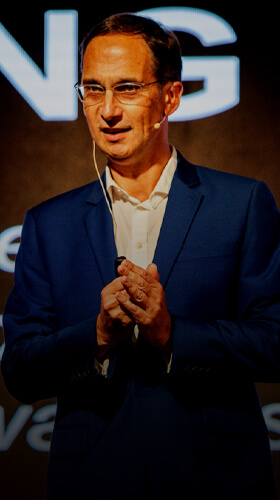
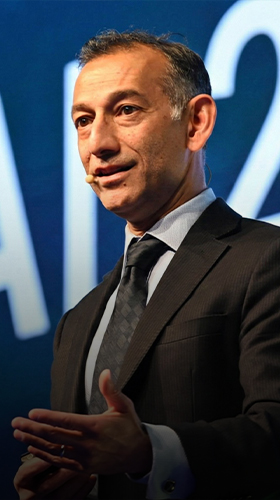
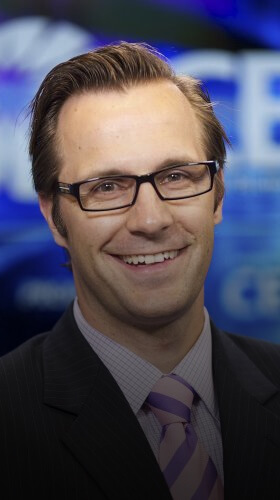
Azeem Azhar — founder of Exponential View, member of the WEF Global Futures Council on Digital Economy & Society, and venture partner at Kindred Capital — brings an analytical framework for translating exponential technology curves into board-level decisions that is grounded in both institutional research and active investing. That combination means he can answer questions a strategist cannot, because he has put capital behind his convictions.
David Rowan, founding editor-in-chief of WIRED UK and advisor to Lakestar, offers a different but equally grounded vantage point: as an operator-investor with access to the rooms where emerging technologies are commercialised, his trend analysis is rooted in how new sectors actually form, not how they appear from the outside. These two profiles — analyst-researcher and operator-investor — illustrate the range of rigour available.
Both sit in a different category from the commentator who synthesises others' experiences; that distinction matters acutely when a sceptical CFO is in the front row.
Can they hold a room of sceptics?
Risk officers, engineering teams, and boards push back differently from marketing audiences — they want evidence chains, not plausible narratives. A speaker who calibrates rigour and scenario language to that room without diluting the methodology is a rare asset. For event teams unsure whether they need this page or the adjacent futurist speakers category, the clearest differentiator is time horizon and domain breadth: this page is for applied, near-term, multi-domain foresight; futurist speakers occupy the longer-horizon, systems-level space.
The goal is wisdom architecture, not speaker selection — the right practitioner turns a conference session into the catalyst moment where foresight becomes an organisational capability your team carries into every subsequent planning cycle.
Topics Our Future Trends Speakers Cover Most Often
The breadth of territory covered by futures speakers on our roster reflects the breadth of decisions UK organisations are facing between now and 2030. Each cluster below maps to a concrete near-term question — not a subject area, but a decision your audience needs to make.
AI and the 3–5 Year Strategic Horizon — Beyond hype cycles: what AI adoption actually means for capital allocation, workforce planning, and competitive positioning through 2030. Our disruptive innovation speakers cover adjacent ground for organisations where innovation strategy, rather than applied foresight, is the primary brief.
Geopolitical and Supply Chain Futures — Trade fragmentation, nearshoring, and the strategic implications of a multipolar economic order for UK and European businesses planning cross-border operations.
Energy Transition Scenarios — The timelines and business-model consequences of decarbonisation; what the energy mix looks like in 2030 and how organisations should structure capital expenditure decisions around it.
The Future of Work and Workforce Design — Automation, demographic shifts, and generational values convergence; how organisations build and retain capability in a structurally altered labour market.
Consumer and Cultural Trends — Behavioural shifts in purchasing, attention, and loyalty; what CMOs and product leaders need to anticipate rather than react to in their next planning cycle.
Demographic and Generational Futures — Population ageing, Gen Z and Alpha entering peak economic influence, and the strategic implications for product design, policy, and people leadership.
Quantum Computing and Biotech Convergence — The 2027–2032 horizon where quantum advantage and biological engineering intersect; the territory that innovation officers and R&D leaders need to map before long-cycle investment decisions lock in.
When Should You Book a Future Trends Speaker
A futures speaker earns their place at specific inflection points in an organisation's planning calendar — not as a general conference warm-up, but as a catalyst for decisions already on the table.
Annual Strategy Conferences and Executive Offsites — The highest-volume booking context. Boards and C-suites use external foresight to pressure-test 3–5 year plans and surface blind spots before budgets lock.
Sector Summit Keynotes — Industry associations in financial services, retail, energy, and healthcare commission futures sessions to contextualise regulatory and market shifts for their members ahead of a new planning cycle.
Sales Kickoffs — Commercial teams need a credible external voice on where their market is heading to sharpen go-to-market narrative and competitive positioning for the year ahead.
Innovation Days and Internal Hackathons — A futures framing session at the opening anchors divergent thinking in real trend signals, preventing brainstorming from becoming uncoupled from market reality.
Board and NED Development Sessions — Boards with independent NEDs increasingly commission structured foresight to meet governance obligations around horizon-scanning for risk and opportunity.
Leadership Development Programmes — HRDs and CLOs embed futures literacy as a core leadership competency; keynote-plus-workshop formats are the standard delivery mechanism here.
Customer and Partner Conferences — Organisations hosting clients or channel partners use futures content to demonstrate strategic thought leadership that extends the conversation beyond the transactional.
The strongest bookings tend to combine two or more of these contexts — a futures keynote at a sector summit that feeds directly into an executive offsite the following month creates strategic momentum rather than an isolated event.
How to Choose the Right Future Trends Speaker
McKinsey research on strategic planning effectiveness finds that traditional planning processes struggle to incorporate longer-horizon scenarios beyond the next 12 months — and that external expert sessions remain one of the most cost-effective interventions for expanding leadership planning horizons. A poorly matched futures speaker does not close that gap; it reinforces it by confirming that foresight is someone else's specialist topic.
Methodology depth versus trend reporting — Does the speaker leave audiences with a repeatable framework or a list of interesting observations? Distinguish three profile types: the trend reporter (broad, accessible, low methodology depth), the scenario architect (framework-heavy, highly transferable across planning contexts), and the domain-specific futurist (deep sector expertise, narrower applicability). For strategy teams and boards, methodology depth is non-negotiable.
Sector and domain specificity — A speaker with direct experience in your sector — financial services regulatory futures versus consumer behavioural futures, for example — will land scenarios more credibly than a generalist working from published research.
Audience scepticism profile — Engineering teams, risk officers, and CFOs require data-rigorous, scenario-tested material; creative and marketing audiences can absorb more speculative framing. Match the speaker's evidence style to the room before shortlisting begins.
Format fit — A 45-minute keynote delivers the catalyst moment; a half-day workshop embeds the methodology. These outcomes are not interchangeable — confirm which one the event actually requires before the brief goes out.
Time horizon alignment — Some practitioners specialise in the 1–3 year operational window; others work the 10–20 year systems level. Match the horizon to the decision the audience needs to make.
Practitioner versus commentator — Has the speaker founded a company, sat on a board, or deployed the technology they discuss? Or do they synthesise others' experience? Both have genuine value, but C-suite audiences probe harder on the former — and a speaker who cannot answer those follow-up questions undermines the room rather than energising it.
For a full breakdown of investment levels by speaker tier, see our guide to keynote speaker fees in the UK.
How Speaker Agency Helps You Find the Right Match
Getting to the right futures speaker quickly requires diagnosing the right problem first — which is where most event briefs stall.
Map the wisdom gap. Speaker Agency works with the event organiser to diagnose the specific foresight capability gap before a single speaker name is proposed — distinguishing whether the audience needs strategic scenario methodology, sector-specific applied analysis, or cultural and behavioural foresight to inform the decisions immediately in front of them.
Curate the elite voices. Drawing on a 300+ UK roster and 1,190+ global network, Speaker Agency delivers a calibrated shortlist within 24 hours. Curation covers the full spectrum from near-term applied practitioners to longer-horizon systems thinkers, matched to the audience's scepticism level, decision horizon, and the specific domain where the capability gap sits.
Architect the catalyst moment. Speaker Agency works with the chosen futures speaker on briefing, format design, and audience calibration — building a transformation blueprint for the session that produces strategic clarity, not a passive trend briefing. The goal is a moment where the audience leaves holding a framework, not a feeling.
Sustain the momentum. The catalyst moment is the beginning, not the conclusion. Speaker Agency supports follow-on formats — workshop extensions, executive roundtables, and advisory briefings — that convert the foresight session into embedded futures capability within the organisation, sustaining the momentum through the planning cycle that follows.
Speaker Agency operates as a Wisdom Catalyst across UK, Europe, and Türkiye — the distinction between booking a speaker and architecting a wisdom transfer that outlasts the event is not a matter of scale; it is a matter of intent. Every engagement is designed so that when the room empties, the thinking it produced does not.







 After Dinner Speakers

 Discover Similar Topics